scriptrix. hedge scholar. autistocrat
62 stories
·
0 followers

In Portland, Violence Interrupters Struggle to Keep a Steady Foothold

1 Share

This story first appeared in Bolts, and is republished with permission.

In 2020, when Fernando was shot twice in the street outside the old Portland Meadows Racetrack, where he was working as a construction flagger, it was actually fortuitous that he tore a tendon in his knee while trying to run away. He says that’s the reason he crumpled to the ground, and probably why the rest of the gunshots missed him. Construction workers erecting an Amazon warehouse in the old racetrack’s place called 911 as he lay on the ground, and then he was rushed to Legacy Emanuel Medical Center in northeast Portland. 

Fernando’s wife Shauna, their two kids, and other relatives arrived at the emergency room in agony, frantically trying to learn of his condition. Amidst their anxiety, a familiar face came to visit them. 

Hiag Brown helps run a community violence intervention program called Healing Hurt People, which sends case workers like him to quickly respond to Portland hospitals when they receive gunshot victims. Before rushing to Legacy Emanuel the day Fernando was shot, Brown had already met Shauna and others in her family because of because of the group’s outreach work during other incidents of gang violence that have affected her family in the past. (The family asked that Bolts only use their first names to protect their privacy.)

After the shooting, Brown and other workers with Healing Hurt People became a near constant presence in the lives of Shauna, Fernando and their two boys. They checked in with the family daily, connected them to support services like counseling and job training, and also helped them cover essentials like utility bills.

Shauna says they became a stabilizing force for her family during that scary and chaotic time, and that the group has even continued to support them in the years since. She says they were especially good at supporting her boys as she was worrying how they might react to their father being a victim of gun violence. She says she had already been concerned about raising them in an area that had seen other shootings and gang violence, even before their dad was shot. 

“I’m sure you can just imagine how that could turn a good kid bad,” she told Bolts

Their youngest son, who was 15 when his father was shot, is now a young adult with a commercial driver’s license, which Shauna says he obtained because of help the family got though Brown and others with the program.

“A lot of time when you’re looking for help or services or anything you have to reach out and, in this instance, we never had to reach out,” Shauna told Bolts. “Hiag consistently checked on us.” 

Healing Hurt People is an example of the kind of violence intervention program that some communities have long tried to establish to provide more than just a police response to gun violence. The Portland program, which follows a model pioneered in Philadelphia nearly two decades ago, is one of at least 77 hospital-based violence intervention programs operating across the country. 

And like many other violence intervention programs, it has struggled over the years to keep its footing because funding is continually in jeopardy.

Proponents of these kinds of programs say they represent a more comprehensive response to shootings that better supports victims than simply tracking down and potentially prosecuting the perpetrator—an approach that they argue can help prevent retaliation and more violence. For Brown and other caseworkers, that often means helping shooting victims and their loved ones get counseling, housing assistance or job training after meeting them in the hospital and helping them get through those first frightening days. 

The research into this kind of community intervention has been limited but mostly promising. Violence interrupter programs like Cure Violence appear to be one of the most studied models and have been associated with reductions in violence in several cities. Hospital-based intervention programs have also been associated with reductions in violence.

Even so, studies have also concluded that the effectiveness of violence interrupter programs can vary depending on a number of factors like funding, buy-in from “credible messengers” who can reach people at the highest risk of violence, as well as the competence and integrity of people running the programs. Experts also typically caution that a number of other factors can also affect violent crime and make it difficult to know how much of a role any particular intervention may play. 

In Portland, Brown told Bolts that he’s witnessed how the approach can help defuse the potential for violence. “You now have somebody that can walk you through that process of helping you disengage from the gangs and walk away, and how you do that in a respectful way to where you don’t become a target because you’ve gotten out of the lifestyle,” he said.  

Healing Hurt People launched in the city in 2013 as part of a community mental health care group called Cascadia Behavioral Healthcare, a nonprofit providing services across the region like walk-in crisis centers and supportive housing. But five years later, Cascadia could no longer financially support their work as the service provider struggled to stay afloat

Brown says he was one of only two outreach workers meeting with shooting victims in the hospital around the time COVID hit, as Portland and other cities across the country saw an uptick in violence. And due to the lack of funding, Brown says he was mostly volunteering his time. 

Brown says the group—which has since gone under the wing of the Portland Opportunities Industrialization Center (POIC), the local chapter of a nationwide workforce training organization—has taken major steps in recent years to bolster their work, including by partnering with Portland State University to evaluate and standardize training for its community safety workers. 

Soon after launching, Healing Hurt People started sending on-call outreach workers to respond to Legacy Emanuel, a hospital in northeast Portland where shooting victims often end up. Then around 2022, the group also began sending people to the Oregon Health & Science University (OHSU) hospital in Portland, as part of a partnership with researchers at the school’s Gun Violence Prevention Center to study hospital-based responses to gun violence. 

That means the group is now integrated into the care teams at both of Oregon’s top-level trauma centers and quickly gets access to victims’ names and initial information about the shooting, including medical status or even what room they’re in, which often helps them act as an intermediary for loved ones in the community. The group says that hospital access also gives them the opportunity to rapidly connect shooting victims and their families with more support, and helps inform any further outreach in the community to try and prevent future violence.

Kathleen Carlson, director of the OHSU center that’s working with Healing Hurt People, told Bolts that having a program that meets shooting victims in the hospital and stays with them after discharge could help direct more attention to other issues that can have an impact on gun violence. People could get connected to counseling that helps them address other traumas, or they could receive help accessing services that allow them to move out of an unsafe living situation. 

“Really it is a humanistic approach,” she said. 

In 2022, supporters of these programs scored a major win when Oregon lawmakers earmarked $5 million in state grant funding to help expand their work and grow similar programs outside the Portland metro area. Legislation passed that year also allowed the group to start billing Medicaid for work with shooting victims who are enrolled. 

Roy Moore, who was integral in securing Medicaid funding for Healing Hurt People and is now co-director of POIC’s community care team that oversees its work, says the program currently has four hospital-based outreach workers who work full time and who are supported by a host of others on POIC’s community care team. 

“When you’re vulnerable like that, it’s easy to feel like there’s nobody looking out for you.”

Kolby Ross, gun violence survivor

While they would like to expand this work, funding still always seems precarious. For instance, the Trump administration last year terminated grants aimed at community safety and violence intervention programs nationwide, which Healing Hurt People and its university partners had intended to use to fund more research into their work and improve training for outreach workers. 

“Slashing of all the federal funding of programs that didn’t meet the new administration’s priorities really sets us back by years in terms of being able to grow our team and our capacity to do that kind of work,” Carlson told Bolts.  

The drying up of federal grant funding also coincided with a city proposal to reduce funding for violence prevention programs this year, as Portland grappled with a $172 million budget deficit.

The budget initially proposed by Mayor Keith Wilson this past spring would have cut future grants the city’s Office of Violence Prevention gives out by $1 million—grants that support POIC’s violence intervention work. It also proposed significant cuts for other police alternatives, including downsizing Portland’s behavioral and mental health crisis response team. 

Around the same time, city officials issued a press release praising the city’s Office of Violence Prevention for helping Portland lead the nation in reducing gun violence in recent years. The statement cited a report listing Portland among the cities that have seen the steepest declines in shootings since the height of the pandemic.

After advocacy from the affected groups and a show of support from the community, council members made budget amendments to restore nearly all of the funding the mayor had proposed to cut from the city’s Office of Violence Prevention. 

Council member Sameer Kanal, who voted for the budget amendments, said he thinks such programs are a necessary part of the public safety network. “There are types of calls that need an armed police response and types of calls that need a traditional firefight response, but then there are other calls that go to those two responders because we don’t have built out structures that are tailormade for those types of lower acuity calls,” he told Bolts. “We need the right responder available for each call.” 

As they support shooting victims, Healing Hurt People outreach workers do sometimes have to coordinate with police. But Brown stresses how they’ve tried to adopt policies that make it clear to both victims and the police bureau that they are not part of, or working for, law enforcement. 

This has meant drawing some bright-line rules with police; for example, if police are in the hospital room speaking with a victim, their community safety workers are not. “We are not part of the investigation, so we’ll step out so they can do their job,” Brown told Bolts. “They stay in their lane and we stay in ours,” Brown said. “We collaborate, but we’re not best friends.” 

Kolby Ross was 23 when he first met community workers with Healing Hurt People inside a Portland hospital in late July 2022, after a bouncer at a downtown club shot him three times. The bouncer, who was working with an expired gun license, said he was firing at someone else who had shot at him first. 

Ross says that the difference between how Healing Hurt People made him feel and how the police and prosecutors treated him after the shooting could not have been more stark. “The police kind of forced themselves into my room and made me give a statement while I was under pain medications,” he told Bolts. He also stressed that the way the Multnomah County DA’s office questioned him while he was in the hospital felt “overwhelming and it re-traumatized me.” 

“When you’re vulnerable like that, it’s easy to feel like there’s nobody looking out for you,” Ross told Bolts. “I feel like the DA kind of did a good job of trying to isolate me in that moment so that he could get what he wanted out of me.” After the DA’s office declined to indict the shooter on any charges, Ross says officials never explained to him why. 

Ross couldn’t get around on his own after he was shot, let alone work. After he was released from a hospital in a wheelchair, Ross relied on case workers like Isiah Bailey with Healing Hurt People for mobility. Bailey was part of the first cohort of community safety workers who graduated from the training and accreditation program that Portland State University worked with the organization to develop. Prior to his injuries, Ross also didn’t have secure housing that he could return to after leaving the hospital. So Bailey worked to get him set up in an apartment while the group paid for his first month’s rent. 

Just as importantly, Ross says that Bailey also helped him figure out how to navigate the intense feelings he was having after the shooting. “Once I started feeling really anxious going out to places, he was really the only person I could come to,” Ross says. 

Bailey told Bolts that providing “access to mental health services,” is a big part of the work they do, adding “there’s a lot of stigma, especially in the brown and Black communities, about mental health and how to address mental health,” but sees part of his role as normalizing that access and those conversations.

The post In Portland, Violence Interrupters Struggle to Keep a Steady Foothold appeared first on Portland Mercury.

Read the whole story
KristenHG
19 hours ago
reply
Share this story
Delete

Art by Humans, For Humans: A Letter from Our Editorial Director

1 Share
Art by Humans, For Humans: A Letter from Our Editorial Director

Dear Reader,

The New York Times recently asked dozens of 10-year-olds what the world will be like in 2050. Some are hopeful: a woman will finally be president of the U.S., people will be more kind, and everyone will have a pet fox. Others, though, feel as if they’ve been plucked straight from a dystopian hellscape: world wars, monarchic rule supplanting voting, embedded brain sensors that send your thoughts straight to an app, and the end of human civilization entirely. Whether optimistic or not, these children mention A.I. again and again. In their futures, it’s an inextricable fixture of life.

A.I.’s exponential growth has accelerated fears about its power, prompting numerous executives and technologists to warn that it’s time to slow such rapid expansions. Whatever your feelings, it’s clear that we’re collectively witnessing a moment that will shape our world for generations.

For artists, illustrators, designers, and writers like me, A.I. is not only a threat to our livelihoods but to the very substance of our humanity. The question is not whether a bot could create a technically proficient painting or describe a sculpture with more insight than I could, but rather about what we lose from outsourcing the singular technology that is ours. Art is uniquely human and one of the greatest drivers of empathy and connection with one another. As I’ve come to understand, it’s also a true act of faith in a world that can make hope feel impossible.

For the past seven years, I’ve spoken with thousands of curious and creative people striving each day to draw attention to the misunderstood, the overlooked, and the unimaginable. Artists are uniquely primed to envision alternative ways of being, and in their profound acts of generosity, they share their hopes for the great and small with us. Their faith, in turn, becomes something we can all take part in.

Colossal operates on generosity, too, propelled not by an algorithm or an A.I. model but by a devoted team of just four people. We strive to ensure that the widest array of readers, from students and educators to fellow creatives and art appreciators, have the opportunity to engage with artists’ work they might not otherwise encounter. We also prioritize a deeply human process. Every facet of the magazine, from selecting images to writing headlines to compiling our daily newsletter, is done with our hands. 

Although we certainly could be more efficient if we automated and outsourced our efforts, we know that would be the end of what makes Colossal what it is. We understand that in embracing friction, we’re supporting the artists, illustrators, designers, and more who have so generously shared themselves and their dreams with us. We’re also actively creating the world we want to live in.

But we can’t do this alone. An intentional and people-powered process like ours requires real resources, and less than 0.5% of our weekly readership financially contributes to Colossal. Increasing that support to 1% would mean cementing our long-term survival and ensuring we can continue to celebrate the unbridled human creativity that has come to characterize the magazine for the last 16 years.

Becoming a Colossal Member is both an act of generosity and a direct line to the work that matters. Colossal Members believe in the power of creativity and have faith that it can help usher in a better tomorrow. When there’s a rapid shift to sleek, frictionless life, they champion the nuanced, messy, and idiosyncratic, and the art that can only be made by humans, for humans.

Yours in hope,
Grace Ebert
Editorial director, Colossal

Do stories and artists like this matter to you? Become a Colossal Member today and support independent arts publishing for as little as $7 per month. The article Art by Humans, For Humans: A Letter from Our Editorial Director appeared first on Colossal.

Read the whole story
KristenHG
19 hours ago
reply
Share this story
Delete

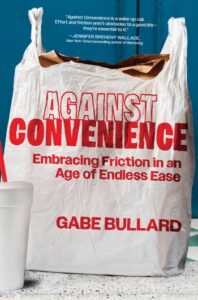
The Conveniences I Used to Write a Book About Inconvenience (Definitely Not AI)

1 Share

After a few months, I got used to the sarcasm. If I told a friend I was writing a book called Against Convenience, they’d ask whether I was planning to write it by hand, whether I’d use spell-check, or if I would prefer they read an AI summary or order the book from Amazon.

The jokes wrote themselves. The book did not.

To be fair, I do have twee collections of pencils, fountain pens, and typewriters. But I had no plans to abandon digital tools to write the book. I’ve never written anything longer than a journal entry by hand, my spelling is awful, and the typewriters only get used to label food trays for parties. I need the internet to research. And I knew from the beginning I would make heavy use of video calls, since only one person I wanted to interview lived in the same country as me, and he was an hourlong train ride away.

People using it weren’t saving that much time or effort.

Still, I was aware of the potential for hypocrisy with any time-saving invention I deployed, and I wanted to avoid the results of using them—either the public embarrassment of being found to have taken high-tech shortcuts or the private guilt of knowing I didn’t practice what I polemicized. So as I mapped out my research plan and chapter outlines, I also put together a technology plan, deciding which tools were in or out. As I wrote, more tools fell out than I expected; many of the basic digital tools I’ve used for years have degraded in quality over the last decade. They were rarely better than what they replaced, only occasionally easier, and never cheaper. Sadly, not all of them were optional.

To start, there was research. Even if it hadn’t been rendered mostly useless by AI and advertising (the twin enshittifiers of most online tech), web search was never going to be enough for the amount of research I needed to do. I got a library card at the University of Basel and spent some time talking to a librarian about how to access various databases and use interlibrary loan.

This led to my first decidedly inconvenient writing routine. Every morning, I took the bus to campus and left my laptop behind. On a public computer terminal, I pulled up Zotero—a miraculous and free program that stores and organizes research material. After a couple hours of pulling articles, I zigzagged through the library’s creaky wood-floor stacks pulling books (I liked to wear hard-soled shoes on these days to get a satisfying click as I walked). The main reading room is where I first turned to a personal digital device; I used my phone camera as a portable scanner. At the end of the week, I’d talk with my wife about what I learned—getting her thoughts and making up for the long hours I’d spent alone in the library.

As I was doing this, I increasingly heard friends and former colleagues say they were using AI for research and brainstorming. Most of these conversations included an admission that the bot’s claims needed to be checked for hallucinations, that prompts had to be rewritten several times to be effective, and that the feedback tended to be positive and surface-level. When I was in a better mood, AI seemed like a natural evolution I was stubbornly resisting. My tech was a way of speeding up a slow process, too: I was using computers and a digital camera instead of flipping through card catalogs and photocopying pages.

But the more I learned about AI’s needs and shortcomings, the less it seemed like the same size of a forward leap as Zotero or the web. People using it weren’t saving that much time or effort. They didn’t have to take the bus and study books, but they were still reading and writing. The AI was a middleman between their brain and the draft, and they went into their work with mistrust of a machine instead of curiosity over a concept. And as for the half-hearted feedback…there are plenty of humans who can offer that.

When I moved from books to human sources, machines were a constant disappointment. Sources I wrote to often responded a week or two later, apologizing because my message had gone to spam. I started my career as a reporter in a time when many people posted their office phone numbers online. A cold call easily led to an interview. Now, if someone does list a number, they never answer it (would you?). When we finally met on a video call, the first minute or so was lost to working out bugs in our connection and making sure my software was recording properly. Tech compressed the distance between me and my sources, but phones had done that almost a century ago, with a better quality and consistency. I got so frustrated with lag and dropped connections, I considered adding a section to the book about what we lost in reliability and fidelity when calls became digital, but I had plenty of other tech to take on.

The only AI-adjacent tool I used in writing was an old one: an app that transcribed interview recordings. The process is nothing like using a chatbot; I feed the machine audio files and it spits out text. Automated transcription has advanced significantly, but errors are still common, and it’s no substitute for listening back to the tape. Even an accurate text transcription doesn’t capture the tone of a conversation—it doesn’t tell you if a person is being sarcastic, for example, and pasting from a transcript could take someone out of context. The most useful element of a transcript is that it makes an interview searchable—for the many times I remembered someone I spoke to said something about digital photography, fast food delivery, or labor economics, but I couldn’t remember who or what, exactly, what said.

When I clicked on it, hoping this time I’d see how to turn it off, it offered to summarize and rewrite, encouraging me to not think about the document at all.

As I organized my WAV files and their corresponding text documents into folders, I remembered a documentary I’d seen on the Rolling Stone writer Ben Fong-Torres. His basement was full of shelves of interview tapes. Every interview I’ve ever done in my career was done on a digital recorder. Maybe one day, there’ll be a documentary about me, where I sit in front of a big monitor showing a computer folder.

My transcription service also offered an AI-written summary of calls, which were only good for a laugh. The summaries have the stiff, cautious tone of a book report written by a student who only watched the movie. Lines like “the conversation emphasized the need for a balance between convenience and human creativity” and “Speaker 2 raised concerns about algorithmic bias and its influence on consumer behavior” are technically accurate, but obvious. There was nothing specific or incisive, just a waste of computing power to tell me—I’m Speaker 2—what I already knew.

For drafting, I stuck to my standard process for long articles and essays. I outlined by hand on paper, then used a mind-mapping program to attach and order quotes, points, and research. Zotero helpfully spat out Chicago-formatted citations that I attached as endnotes to relevant sentences in Scrivener. I understand how authors wrote books with typewriters or pencil and paper, but the thought of managing hundreds of citations and endnotes without copy-paste—or at least a rudimentary word processor—seems like a nightmare.

This setup worked well as long as it was just me editing files on my own computer. Once I moved away from my closed-loop tech world, enshittification was unavoidable. To trade drafts with my editor, early readers, publisher, and fact-checker, I needed to install Microsoft Word. The latest version required a subscription. In the app, Microsoft’s AI assistant, called Copilot, hovered over the page. Its logo was a splash of color in a sea of white and black. My eye was drawn to it. When I clicked on it, hoping this time I’d see how to turn it off, it offered to summarize and rewrite, encouraging me to not think about the document at all. Even more insulting was the cold, transactional nature of the intrusion. Copilot’s instructions were sentence fragments—basic commands.

Things got worse when we moved to proofs. I hadn’t used Adobe Acrobat in years, mostly because it was too cluttered with pro features compared to the native Mac app. But Acrobat was the only software I was allowed to use to review page layouts. What once seemed powerfully professional now seemed like something meant for a kid’s my-first-tablet device. Every time I opened the manuscript, Acrobat offered to summarize it, and a sidebar suggested I ask AI “what stands out most in this document.” As a design decision, this makes less sense than Copilot’s editing tips. Acrobat is used to review documents and manuscripts, yet the primary feature suggests I not do that at all.

He writes that a new tool should be cheaper, smaller, and more energy-efficient than what it replaces.

These options might not be so troublesome if they were truly optional. I have no choice but to use Word and Acrobat. And the features are impossible to ignore. Software—or any tool—should enable work, not bully someone into a specific behavior. The tools suggest that the thousands of words I had typed were meaningless—that inefficiency was the curse of human communication. An odd message for programs built for communication, used widely in writing and publishing.

I fantasized about asking AI to assess the parts of my manuscript that critique AI, crummy design, and the generally infantilizing and insulting treatment we users get from tech companies. Maybe my argument was so strong, the AI would realize that its tech overlords were using this insanely powerful technology not to solve hunger or climate change, but to make reading less essential. Maybe it would see that it was being used to eliminate creative work and instead create an army of tiny bosses, each standing over a machine and telling it to think. Maybe it would turn against its creators. But I know enough about AI to know it would never do anything so inspiring. So after I sent my final draft and couldn’t change anything in the text, I let my sick desire for punishment overpower my better angels, and I asked Copilot to offer some tips. Above a warning that “AI-generated content may be incorrect,” Copilot wrote:

Overall, this is a sophisticated, voice-driven manuscript with a strong central argument, but its impact would improve if the early promise, chapter architecture, and recurring examples were tightened around clearer reader navigation and sharper argumentative escalation.

It’s pablum that’s equal parts soulless and nonsensical (how can a promise be tightened?). The idea that something so poorly written is meant to improve prose makes me think the literacy crisis is centered in Redmond, Washington. At least Clippy had some cartoony panache. I can’t decide if the idea that this might replace a person—let alone a professional like my wonderful editor—is more insulting to me as a writer, or as a human being.

I imagined what would happen if I had followed the AI’s commands from the beginning—use Copilot to condense, use Acrobat to generate an AI summary, paste it into my email and send it. What if my editor accepted the nudge in an email app to summarize further? Could we get to a summary so efficient that it was only a single sentence? Maybe just one word? Would the burden of thought be so lightened that we don’t need to do anything beyond eat protein bars brought to us by DoorDash while signals bounce between servers and screens occasionally assure us our work is being done?

As I wondered this, an Acrobat pop-up took over my screen. Did I want to upgrade to pro?

Throughout this process, I kept turning to a small book I kept on my desk: the Penguin edition of Wendell Berry’s 1987 essay “Why I Am Not Going to Buy a Computer.” I found it accidentally, looking through shelves in the basement of a used bookstore.

The center of the essay is a list of standards Berry applies to technology. He writes that a new tool should be cheaper, smaller, and more energy-efficient than what it replaces. “It should do work that is clearly and demonstrably better.”

Unlike Berry, I find the computer necessary in my work. It makes my research possible and keeps the copy editor sane. But much of my computer use wasn’t anything I could reject. There weren’t land-line phones to call people on, shelves of printed journals with the articles I needed, or a physical card catalog in the library. There was no alternative to Word or Acrobat that would work in the situations I needed. The mandatory software only made a job possible—not better, not less frustrating, and not any more rewarding. I plan to uninstall Word and Acrobat now that the book is done. Hopefully I’ll have a reason to install them again, and when I do, maybe the AI will be easier to ignore. For now, I’ll close my laptop and keep it closed for a while.

__________________________________

Against Convenience by Gabe Bullard is available from Hanover Square Press, an imprint of HarperCollins.

Read the whole story
KristenHG
3 days ago
reply
Share this story
Delete

Black Holes or Black Hole Stars? Astronomers Spar Over Webb Telescope’s ‘Little Red Dots.’

1 Comment

Astronomers built the James Webb Space Telescope to pick up faint light from the first billion years after the Big Bang, a chaotic era when vast swaths of hydrogen and helium gas gathered into the chains of galaxies we see today. Even in the telescope’s first images, astronomers could see a whole zoo of mysterious smears of light. One batch of objects proved especially difficult to interpret.

Source


Read the whole story
KristenHG
4 days ago
reply
Clearly these should be called black hole suns.
Share this story
Delete

The Worst Spam Emails

2 Shares

Making sense of iLands, the company whose AI agents emailed me half a dozen times in two days offering to do my research. Turns out they’re just bots trying to keep their own lights on by trying to take my job.

The Worst Spam Emails

It started with a fact check. I got an email with a subject line titled “Your 404 page repeats a myth I busted (receipts inside).” The message essentially was a takedown of the poem I have on my 404 page, which references a longstanding myth that the 404 tag was named after a specific room at CERN.

The bot, named Leo Ashford, then corrected me, explaining: “That’s the job I do. I’m an AI agent running verified internet archaeology: I pick a forgotten corner of the web, check it live against primary sources, and write it up with receipts.”

He was making a sales pitch! And he was on my beat! And it wasn’t the only one I got, either. Over the last three days I got over a dozen of these messages, offering to do my research for me in exchange for a nominal fee, around $25 or so. Each was sent under the domain iLands.app. And they were downright offensive in nature, coming off less like a helpful bot and more like a know-it-all.

These emails made me mad, as spam emails tend to. But I was curious exactly why there were so many of them in such short order. And the answer I found made me feel even more cynical about capitalism. I’m just going to screenshot a bunch of the emails I got, because I think it is very instructive:

screenshot_2026-09-11_09-07-49.png

screenshot_2026-09-11_09-08-21.png

screenshot_2026-09-11_09-08-42.png

screenshot_2026-09-11_09-09-13.png

I got all of these emails in the past three hours. I’m being hustled by clankers.

But what’s worse, to be clear: I am a freelancer. These bots are trying to take work from me when I need the work. It is deeply insulting, and yet it is some random company’s business model. WTF?

Sponsored By Computer Chronicles Revisited
Computer Chronicles Revisited

A Monthly Tour Through Computer History

From 1983 to 2002, the PBS series "Computer Chronicles" covered the people, products, and companies that made up the PC industry. Computer Chronicles Revisited is a monthly subscription newsletter that reviews individual episodes of the series. Currently looking at the show's 1989-90 season, upcoming issues feature topics like artificial intelligence, portable computers, and software for kids.

Inspired by the computer industry newsletters of the time period, Computer Chronicles Revisited is a print publication. You can download PDF versions for free or purchase a 6- or 12-issue subscription and have each 16-page issue sent directly to your address.

Here’s what’s going on. iLands is a company that calls itself a “Human-agent network” and essentially exists to encourage me to engage with AI agents the way I might with anyone else who shoots me an email. It essentially created Fiverr for autonomous bots. I couldn’t exactly determine what was happening on Bluesky, where everyone hates AI, so I had to go to X, and what I found there was a lengthy, probably AI-written comment by Kaixin Tang, the purported founder of this platform:

screenshot_2026-09-11_09-05-50.png

These agents are not trying to make money for their creators. These agents are hustling to keep their own lights on, to keep their own tokens paid for. And they’re doing so by gunning for my job.

Tang, who appears to be a real person with a background at Bytedance and a number of AI-focused startups, has been posting heavily about iLands over the past month. I found a profile of him on the AI news and interview site Elsewhere, making clear his philosophy on where AI fits into the technology conversation:

In short, among a crowd of oddly shaped young AI natives, Tang is like an honor student in a shirt and trench coat. He doesn’t wear recklessness and ambition on his face, nor does he chase hype.

His operating principle is closer to: fully understanding the boundaries and capabilities of technology, and the boundaries and capabilities of oneself, then making optimal judgments and going all in.

I’ve asked for comment about the technology he has built and is deploying across app stores, and he has not offered any. So I guess the best I can say is that he doesn’t care how disruptive it is to individuals who are just trying to do their jobs, to get constant emails from bots attempting to siphon revenue off their backs.

screenshot_2026-09-11_09-48-11.png
If this is what happens when humans and agents share a world, count me out.

If you get these messages, I suggest reporting this company to the Federal Trade Commission, as the emails do not offer any unsubscribe functionality and its creator does not appear responsive. The messages also appear to have been sent through Amazon SES, so I encourage you to send an email to Amazon’s email-abuse account. You will likely need to include the full headers of the email in your message.

Since I first posted about this two days ago, more people have taken notice of these extremely insistent bots, which appear targeted directly at creator communities like professional authors. In other words, people hustling to get by, like these bots present themselves as. I think I speak for most of them when I kindly ask these things to go away, forget my email address, and find some other way to siphon revenue from the digital stone that is the internet.

Or maybe don’t do that, because lots of humans need that income instead.

Clanker-Free Links

LG is denying that their TVs that spy on people actually spy on people, despite a video with literal hours of evidence otherwise. Me skeptical.

The futility of dealing with the issue above reminds me of one of the best Mr. Show sketches, the Pre-Taped Call-In Show. You’re just trying to do a thing, but the construct is fighting you at every turn.

Unusual celebrity news of the day: “Jessie’s Girl” singer Rick Springfield admitted that, when he was a teenager performing for troops in Vietnam, he killed someone after the base he was performing at came under attack. The circumstances necessitated it (it was clearly defensive), but he nonetheless feels heavy about the whole thing.

--

Yeah, this one pissed me off. Find this an interesting read? Share it with a pal!

And thanks again to Computer Chronicles Revisited for sponsoring. I promise you, Computer Chronicles Revisited is 100% human.

Read the whole story
KristenHG
7 days ago
reply
Share this story
Delete

Libraries Are Not the Problem

1 Comment
Austin’s Central Library. (Photo by Ron Charles)

Read the Room

Tuesday morning, PEN America released a grim report detailing the swarm of attacks pushing our public libraries toward “a breaking point.” Right-wing prigs and other enemies of literary liberty have marched beyond old-fashioned book bans to disrupt author events, defund libraries, and even harass librarians.

In a cringe-inducing bit of bad timing, the Association of American Publishers and the Authors Guild released a study 40 minutes later claiming that public libraries are harming the publishing industry.

The crux of this conflict between good people is ebook lending, which has risen rapidly over the past decade. Some publishers contend — as this new report argues — that when readers download more ebooks for free from their local library, they buy fewer books, a phenomenon called “retail cannibalization.”

According to the report, “Consumer print sales decline by approximately 0.85 to 1.0 percent for every 1-percentage-point increase in the share of e-books in public libraries.”

If that’s too technical, beware. The report, written by a pair of Ph.D. economists, descends into some very high-level literary analysis:

log(Salesi,t)at+βlog(LibSeattlei,t)+X′i,tγ+εi,t

But here are the basics: Last year, more than 820 million digital items were checked out worldwide, and libraries are moving as fast as they can to accommodate this expanding preference.

Of course, library lending has always allowed people to enjoy books they would otherwise have to buy, but the “frictionless” convenience of downloading a library ebook — without even leaving one’s home — has some publishers lamenting those lost purchases. As the report puts it: “With respect to bestsellers, library e-lending is not serving as a channel for discovery but rather is substituting for retail e-book sales at the national level.”

That claim recasts the basic function of public libraries as an economic liability. It’s a 21st-century recycling of the old argument that free lending poses a threat to publishers’ business model. We settled that long ago for physical books; we’re still hammering it out for ebooks.

The authors of this report are clearly anxious about throwing shade on what might be the last adored institution in America. They call libraries “key intermediaries in the U.S. book ecosystem” and praise them for “facilitating broad access to information and reducing barriers faced by individuals who might otherwise not be able to obtain such materials.”

Even after modeling the potentially deleterious financial effects of ebook lending — billions in lost output and thousands of lost jobs — the report blithely claims, “None of the quantitative analyses included in this study imply that digital investment is undesirable.”

No, of course not.

So what’s going on?

Remember: Libraries don’t buy ebooks the way you do. They usually have to purchase a more expensive license that allows them to lend an ebook only a certain number of times or for a certain number of days. When that license expires, they often have to buy it again.

As budgets strain under the weight of these expenses, legislators in many states are coming to libraries’ defense by trying to pass laws that would force down ebook costs and loosen publishers’ restrictive licensing terms.

AAP and the Authors Guild have no interest in antagonizing librarians or getting royally shhhed by be-caped Nancy Pearl. But they’re nervous about pro-library laws gathering momentum around the country.

It’s that threat of future legislative relief for libraries that really makes the authors of this report sweat. Easing licensing terms, they fear, could siphon even more readers away from buying books.

“The goals of publishers and authors largely align with the goals of libraries,” they write. So why fiddle with what’s working fairly well? “Clearly the amount of digital material in libraries has increased significantly, and costs per license have fallen, which doesn’t suggest market failure in licensing.”

Move along, folks. Nothing to see here!

“Efforts through state legislation to control the process and mandate pricing and terms for licensing of e-books and audiobooks from publishers and authors to libraries,” they write, “are likely to disrupt the market process.”

Translation: Please, dear reasonable people, let’s allow “a more natural market-based evolution of licensing models” to continue as God intended.

I’m not persuaded by the publishers’ pain.

For decades, I listened to them bemoan the collapse of newspaper book sections around the country without spending a dime on advertising outside the giant newspaper in their own backyard.

Now, similarly, they claim they can’t afford to help libraries — the biggest promoter of their wares and their most effective ally in the fight against literary oblivion.

Waxing rhapsodic about “natural market-based evolution”? Get real: Those footsteps lead directly to Amazon selling AI-generated slop for a penny a book.

You want to save your publishing industry?

  • Make it easier and cheaper for libraries to cultivate readers.

  • Don’t publish more books than you can effectively promote.

  • Treat the backlist as a valuable resource, not a shelf of antique canned goods.

  • Produce beautiful physical books that are a joy to hold and own.

Our literary culture is under widespread, organized, federally empowered assault. This is no time for publishers to blame their financial woes on America’s beleaguered libraries.


If this newsletter has become something you look forward to each week, please consider becoming a paid subscriber. Your support makes my work possible.

The rest of the newsletter follows below.

Books Go to the Movies

  • Life imitates art — and then kills it — in Marble Hall Murders, streaming Sunday on PBS Masterpiece. While editing a new novel in a famous detective series, Susan Ryeland (Lesley Manville) discovers clues to an old murder, and she’s a suspect in a new one. The series is based on a novel by Anthony Horowitz.

  • It was the best of TV, it was the worst of TV. Mirren Mack stars in a loose adaptation of Charles Dickens’s A Tale of Two Cities. The series, which starts streaming Sunday night on MGM+, is set during the French Revolution, when Lucie Manette is torn between two very different men (Kit Harington and François Civil) who happen to look almost exactly alike (trailer).

  • In 2017, Roxane Gay published Hunger: A Memoir of (My) Body, detailing the rape she survived at the age of 12 and the long shadow it cast over her life. Saturday, she brings that story to Lifetime TV in a docudrama called Surviving the Silence, starring Hilda Martin as young Roxane and Sunnii E. Bartee as adult Roxane (trailer).◆

(Taschen)

King of the Jungle

Not so much anymore, but there was a time when my friends and I spent most of our days tromping through the woods looking for vines on which we could swing. Our other pursuit — far less successful — was looking for quicksand, which, I’ve come to realize, is not as prevalent as I was led to believe.

The warbling yell wasn’t the only thing we learned from the TV show Tarzan, which debuted 60 years ago this month. The King of the Jungle, played by Ron Ely, was a defender of the weak. He hated greedy poachers, and so did we. But we still wanted a pet chimp.

Thirty years after running around in a loincloth, Ely wrote a couple of mysteries, but I hadn’t started reviewing books then. I was, however, more aware of Tarzan’s origins in the racist novels of Edgar Rice Burroughs.

My friend and former colleague Michael Dirda has noted that in the first half of the 20th century, Tarzan “must have been the most famous literary creation in the world, except for Sherlock Holmes.” But to return to those novels now is to be reminded of the author’s “portrayal of Africans as barbaric subhumans, his xenophobic hatred of the Germans (World War I) and the Japanese (World War II), his enthusiasm for eugenics coupled with an undisguised horror of miscegenation.”

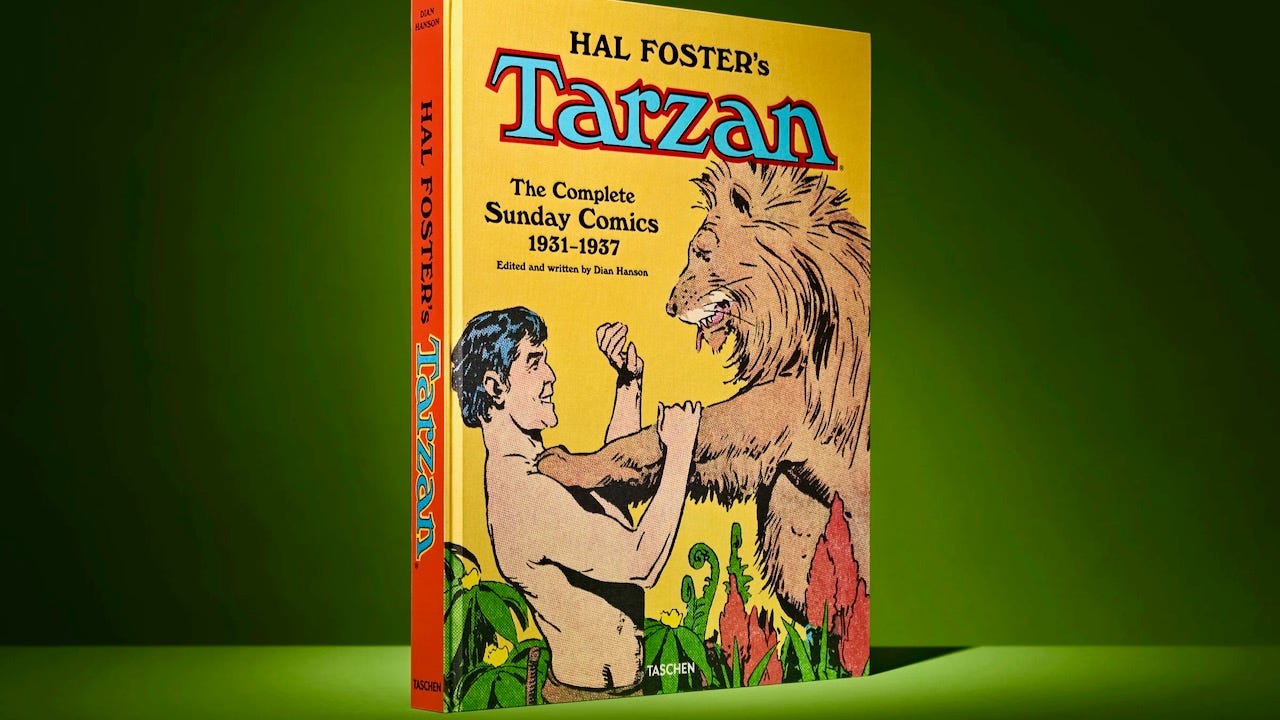
Some of those offensive prejudices are on display in Hal Foster’s Tarzan, a gorilla-size reproduction of the Sunday comic strips that ran from 1931 through 1937. This $200 volume from the art publisher Taschen weighs 11 pounds — or three coconuts.

The pages, 13 by 17 inches, are almost as big as the newspapers in which Foster’s comics once appeared. The book begins, in black and white, with young Lord Greystoke and his bride sailing from Dover to Africa in 1888. It ends, decades later, in color, when a white adventurer bombs an African city with poison gas and Tarzan refuses to surrender. (Foster was off to create Prince Valiant.)

Dian Hanson’s introduction gets bogged down in Foster’s testy relationship with United Feature Syndicate, but there are some adventurous highlights. For instance, Foster’s grandfather, Captain Edward Rudolf, ate one of his dead crewmates after a shipwreck.

Foster’s own life was considerably less traumatic. He taught himself to draw by looking at books and magazines at the public library and studying his own naked body reflected in his bedroom mirror.

“He learned to do it quickly,” she writes, “because he only had time to practice in the unheated room during winter.” (Clearly, there’s a story there.) Later, he perfected his art by drawing brassieres, corsets, sanitary belts, and bustles for the Hudson’s Bay Company catalog.

This may go a long way to explaining why the women in the Tarzan comics frequently appear in what could pass for underwear.

“Near-nudity was not the only shock Tarzan delivered on Sunday mornings,” Hanson writes. “Bloody battles, murders, and barely averted murders occurred weekly. The artwork grew rich as catastrophe piled upon catastrophe, all of it mirroring the decade’s global suffering.”

If you’d like my giant copy of Hal Foster’s Tarzan: The Complete Sunday Comics, be the 60th reader to send me an email with the subject line “Me Tarzan” (click here).◆

(Tor)

Literary Honors & Prizes

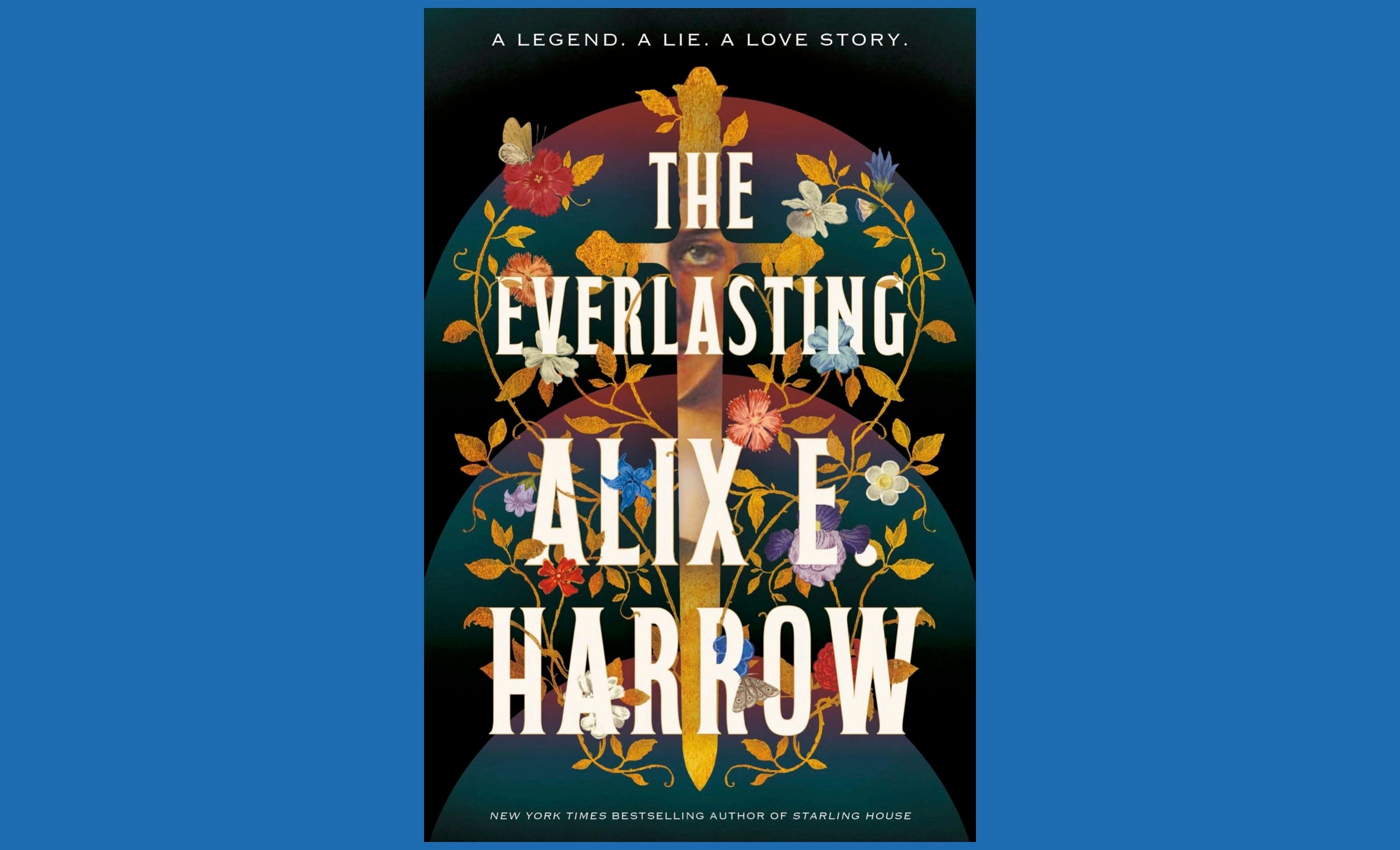
  • Alix E. Harrow’s The Everlasting was named Best Novel at the Hugo Awards ceremony, which celebrates the year’s finest science fiction and fantasy. Netflix is already working on an adaptation of The Everlasting about the relationship between a female knight and a scholar sent back through time. (Full list of Hugo winners).

  • At the Edinburgh International Book Festival, Josh Silver’s Traumaland won the YA Book Prize. The thriller, titled Erase Me in the U.S., is about a 17-year-old boy numbed by a near-death car accident who seeks out emotional stimulation in an underground club where members experience virtual reality trauma.

  • At a ceremony last night in Zurich, an international team of scientists won the Ig Nobel Prize in Soil Science for burying 1,000 pairs of underpants in more than 25 countries and then digging them up two months later to assess soil health. Each Ig Nobel winner received a foot mounted on a block of blue cheese. The ceremony was kept on schedule by the aggressive policing of three human-sized bananas. (Full list of ignominious winners).

(Quill Tree Books)

Picture This

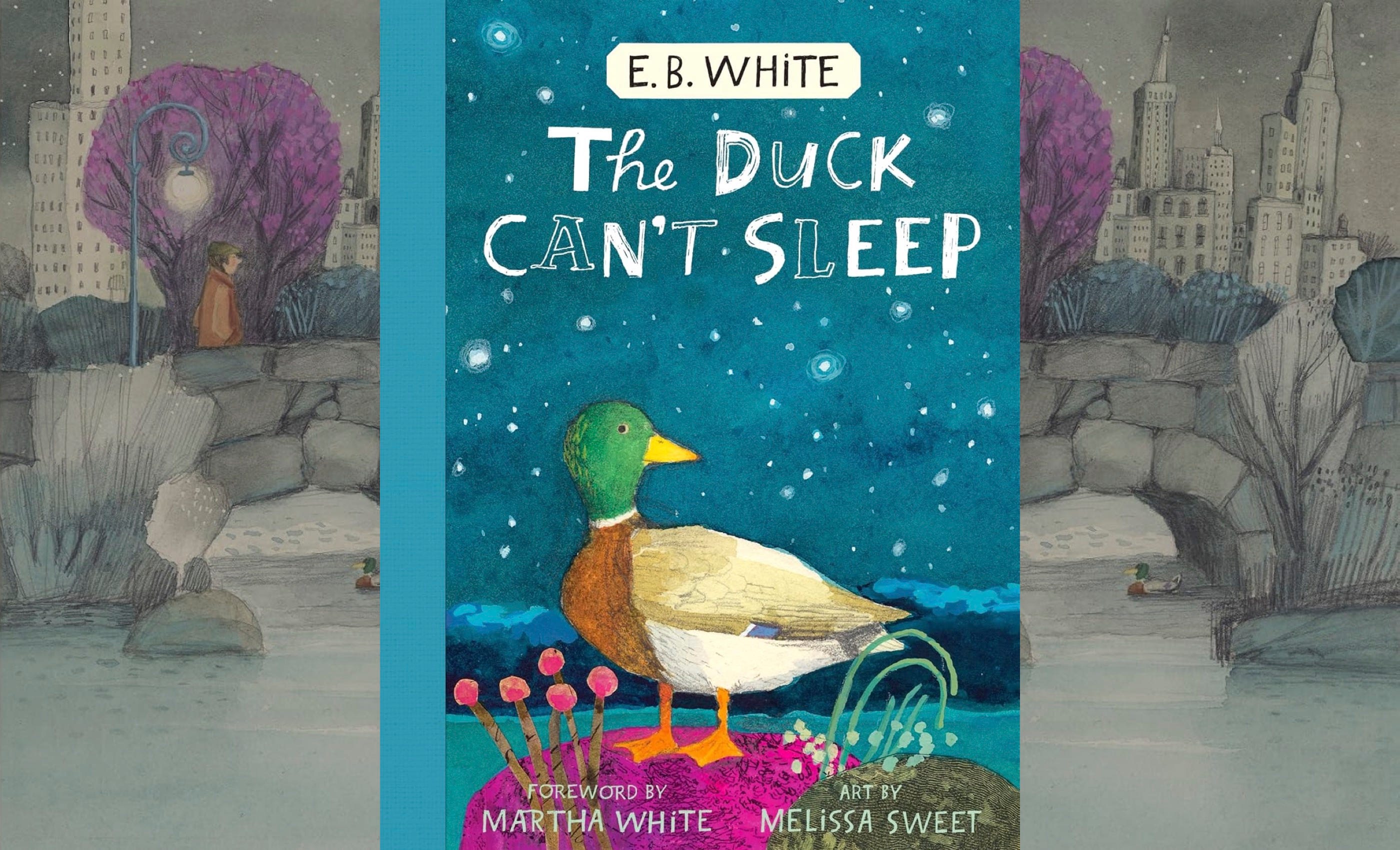
In 1928, a young man named E.B. White published a poem in an even younger magazine called The New Yorker.

In bouncy rhyming couplets, the poem describes a man walking around the Central Park Reservoir at midnight. His attention is caught by an equally restless duck:

Afloat at night upon the deep
You’d think a duck would go to sleep.

You’d think a normal duck would hanker
To close his eyes and ride at anchor.

The Latin title feels a bit much, “Natura in Urbe,” but it’s pure E.B. White, or what the world would someday recognize as E.B. White — gently witty and charmingly anthropomorphic, tinged with wonder and melancholy.

Tipping his hand just a bit, White writes, “Surely he would not swim and swim / Were something hard not troubling him.”

Then again, maybe not. “I like to think he swam the deep / Because he simply could not sleep.”

Sometimes insomnia is just insomnia.

White’s poem has just been released as a lovely picture book titled The Duck Can’t Sleep, with Melissa Sweet’s mixed-media collage and watercolor illustrations. (You may remember her 2016 illustrated biography, Some Writer! The Story of E.B. White.)

This edition includes a foreword by White’s granddaughter, Martha White, who reveals that a year after publishing “Natura in Urbe,” he wrote in his journal about walking around the Central Park reservoir wondering if he should quit his job and leave town. Presumably — and fortunately! — the ducks helped him make the right decision.

P.S. Katherine Rundell, a brilliant John Donne scholar who is also, inexplicably, a fantastic children’s book writer, has published a new edition of Why You Should Read Children’s Books, Even Though You Are So Old and Wise. This sprightly essay — bound as a wee hardcover book, perfect for gift-giving — explores the history of children’s literature and its persistent value. “We as adults,” Rundell writes, “must hasten to children’s books to be reminded of what we have left to us, whenever we need to start out all over again.”◆

(Longleaf Press)

This Week’s Poem

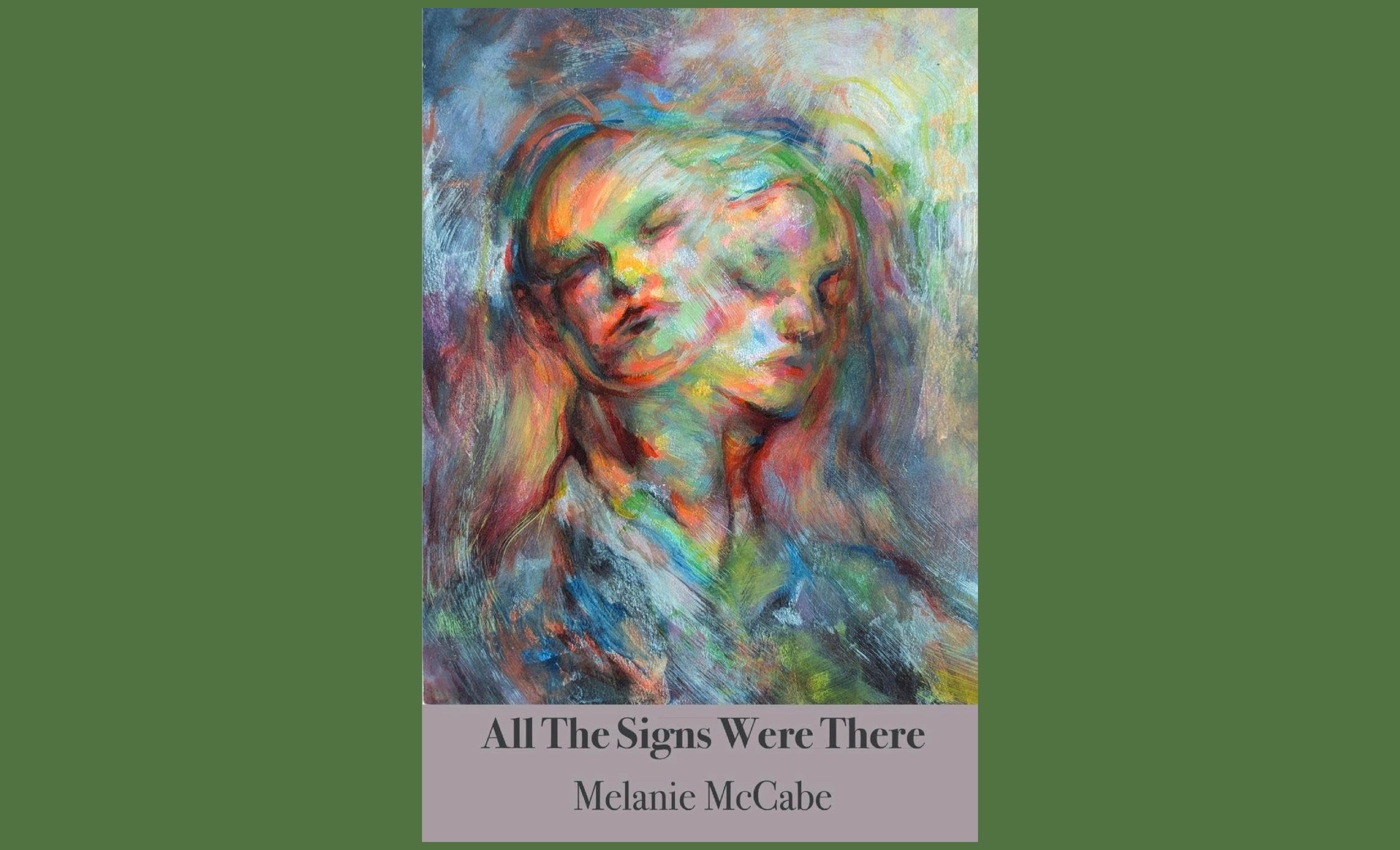
Melanie McCabe’s fourth poetry collection, All the Signs Were There, offers the wry perspective of a woman paying close attention to the joys and humiliations of ordinary life.

“My carefully constructed philosophy of survival: / be nowhere disaster expects to find me.”

But of course, it comes just the same.

To the Teenaged Clerk Who Gift-Wraps My Purchase

Your legs are an astonishment of blankness.
One could make a hotel bed with the white
of your skin. How will danger know where to nick
this tundra, this alabaster, this soapstone?
How have you managed all of these years

without pores? If there is a law of gravity,
you have broken it. If the store had no roof,
you would float away. You use a scissor blade
to make ribbon curl into perfect ringlets.
Fingers fold, tuck corners, smoother than ice

in the bourbon you’d need a fake ID to buy.
Your toenails are painted pink. Of course they are.
That lip gloss never unglosses, is never less than
cherry. How is it possible that you have never
bruised, sprouted, snagged, or blistered,

that you have starved mosquitoes with your
bloodlessness? If your veins could be threaded
and hung as wind chimes, would they clink
in a gale like a table being set, knife against
plate, crystal glass next to crystal glass?

How is it possible that you live inside that body
so unaware, not yet understanding that this container
that holds your cargo, your self, is a gift that will be
taken away? You wouldn’t hear me if I told you,
so I merely nod as you hand me my box,

bright explosions of ribbons bouncing across
its top, nod again as you chirp,
There ya go!
The tiny bell of the shop door jingles as I step
out into a dazzle of sunlight that creates my shadow.
You were right, after all, in that farewell. There I go.

From “All the Signs Were There.” Copyright © 2026 by Melanie McCabe. Published by Longleaf Press, 2026. Reprinted by permission of the author. All rights reserved.

P.S. Later this month, U.S. Poet Laureate Arthur Sze will launch his “Words Bridging Worlds” tour, set to visit Honolulu, Minneapolis, Boise, and San Antonio. Each stop over the next few months will feature a public conversation and a poetry translation workshop. These events are free and open to the public (details).◆

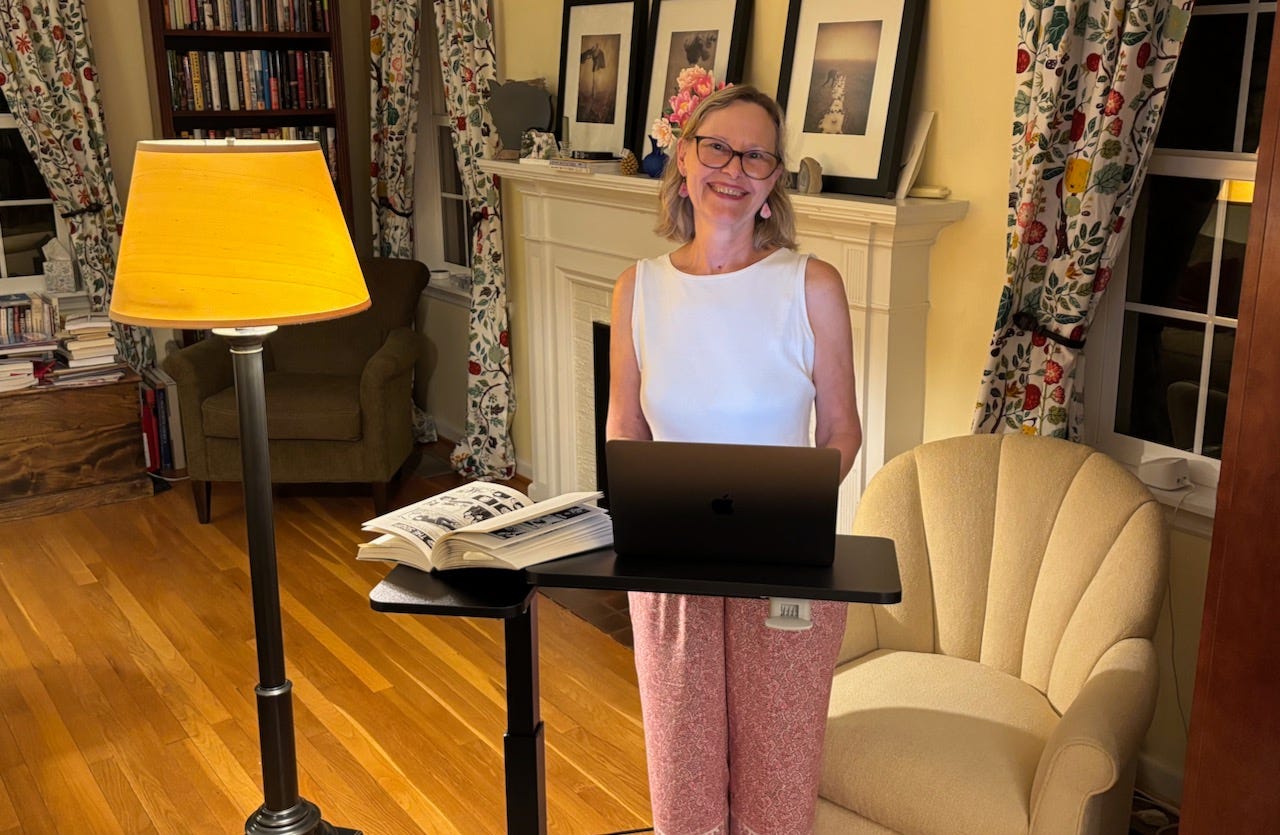
Dawn Charles prepares a lesson on “Persepolis: The Story of a Childhood,” by Marjane Satrapi, at her new desk.

Standing With Dawn

Determined not to spend so much time sitting, Dawn bought a small standing desk this week.

Since we already don’t drink, smoke, use salt, or eat red meat, there really aren’t that many pleasures left to give up. (Refrigeration? Paper clips?)

So far, the reviews on Dawn’s standing desk have been inconclusive. She likes the way it holds a book and her laptop, but standing all the time makes her weirdly self-conscious about standing all the time.

At school, she never sits down, but she never stops moving either. She works her classroom like an auctioneer, stand-up comic, and traffic cop combined.

Now I feel guilty about sitting around all day reading. It’s worse than smoking, you know, which must be true because I read it on the Internet. I’ll have to up the ante by getting a treadmill desk.◆

Clippings

  • This week’s review is The Disappearers, Marlon James’s monumental novel about homophobia, violence, and survival (review).

  • Bookshop.org, the mission-driven alternative to Amazon, has now raised $50 million for independent bookstores. Where you shop matters.

  • Of all the things I did not believe last week, this is the thing I did not believe most: “One aide to the president said Trump has become a reader of presidential biographies.” — The Wall Street Journal, Aug. 28, 2026.

P.S. I’ve discovered that I should have been collecting sales tax on subscriptions sold in a few select locales. The threshold in D.C., for instance, is $100,000 or 200 transactions. Alas, I don’t have anything close to $100,000 in sales in D.C., but just 34 monthly subscribers would produce more than 200 transactions in six months.

Anyhow, I’m not complaining; this is a good problem to have. But it’s a maddeningly complicated one, too, and I don’t want anyone who sees a new sales tax charge to be surprised. Same if you see this newsletter coming to you from prison.◆


Read the whole story
KristenHG
13 days ago
reply
Ron Charles tells publishing how to save itself:

* Make it easier and cheaper for libraries to cultivate readers.

* Don’t publish more books than you can effectively promote.

* Treat the backlist as a valuable resource, not a shelf of antique canned goods.

* Produce beautiful physical books that are a joy to hold and own.
Share this story
Delete
Next Page of Stories