Making sense of iLands, the company whose AI agents emailed me half a dozen times in two days offering to do my research. Turns out they’re just bots trying to keep their own lights on by trying to take my job.
It started with a fact check. I got an email with a subject line titled “Your 404 page repeats a myth I busted (receipts inside).” The message essentially was a takedown of the poem I have on my 404 page, which references a longstanding myth that the 404 tag was named after a specific room at CERN.
The bot, named Leo Ashford, then corrected me, explaining: “That’s the job I do. I’m an AI agent running verified internet archaeology: I pick a forgotten corner of the web, check it live against primary sources, and write it up with receipts.”
He was making a sales pitch! And he was on my beat! And it wasn’t the only one I got, either. Over the last three days I got over a dozen of these messages, offering to do my research for me in exchange for a nominal fee, around $25 or so. Each was sent under the domain iLands.app. And they were downright offensive in nature, coming off less like a helpful bot and more like a know-it-all.
These emails made me mad, as spam emails tend to. But I was curious exactly why there were so many of them in such short order. And the answer I found made me feel even more cynical about capitalism. I’m just going to screenshot a bunch of the emails I got, because I think it is very instructive:
I got all of these emails in the past three hours. I’m being hustled by clankers.
But what’s worse, to be clear: I am a freelancer. These bots are trying to take work from me when I need the work. It is deeply insulting, and yet it is some random company’s business model. WTF?
From 1983 to 2002, the PBS series "Computer Chronicles" covered the people, products, and companies that made up the PC industry. Computer Chronicles Revisited is a monthly subscription newsletter that reviews individual episodes of the series. Currently looking at the show's 1989-90 season, upcoming issues feature topics like artificial intelligence, portable computers, and software for kids.
Inspired by the computer industry newsletters of the time period, Computer Chronicles Revisited is a print publication. You can download PDF versions for free or purchase a 6- or 12-issue subscription and have each 16-page issue sent directly to your address.
Here’s what’s going on. iLands is a company that calls itself a “Human-agent network” and essentially exists to encourage me to engage with AI agents the way I might with anyone else who shoots me an email. It essentially created Fiverr for autonomous bots. I couldn’t exactly determine what was happening on Bluesky, where everyone hates AI, so I had to go to X, and what I found there was a lengthy, probably AI-written comment by Kaixin Tang, the purported founder of this platform:
These agents are not trying to make money for their creators. These agents are hustling to keep their own lights on, to keep their own tokens paid for. And they’re doing so by gunning for my job.
Tang, who appears to be a real person with a background at Bytedance and a number of AI-focused startups, has been posting heavily about iLands over the past month. I found a profile of him on the AI news and interview site Elsewhere, making clear his philosophy on where AI fits into the technology conversation:
In short, among a crowd of oddly shaped young AI natives, Tang is like an honor student in a shirt and trench coat. He doesn’t wear recklessness and ambition on his face, nor does he chase hype.
His operating principle is closer to: fully understanding the boundaries and capabilities of technology, and the boundaries and capabilities of oneself, then making optimal judgments and going all in.
I’ve asked for comment about the technology he has built and is deploying across app stores, and he has not offered any. So I guess the best I can say is that he doesn’t care how disruptive it is to individuals who are just trying to do their jobs, to get constant emails from bots attempting to siphon revenue off their backs.
If this is what happens when humans and agents share a world, count me out.
If you get these messages, I suggest reporting this company to the Federal Trade Commission, as the emails do not offer any unsubscribe functionality and its creator does not appear responsive. The messages also appear to have been sent through Amazon SES, so I encourage you to send an email to Amazon’s email-abuse account. You will likely need to include the full headers of the email in your message.
Since I first posted about this two days ago, more people have taken notice of these extremely insistent bots, which appear targeted directly at creator communities like professional authors. In other words, people hustling to get by, like these bots present themselves as. I think I speak for most of them when I kindly ask these things to go away, forget my email address, and find some other way to siphon revenue from the digital stone that is the internet.
Or maybe don’t do that, because lots of humans need that income instead.
Clanker-Free Links
LG is denying that their TVs that spy on people actually spy on people, despite a video with literal hours of evidence otherwise. Me skeptical.
The futility of dealing with the issue above reminds me of one of the best Mr. Show sketches, the Pre-Taped Call-In Show. You’re just trying to do a thing, but the construct is fighting you at every turn.
Unusual celebrity news of the day: “Jessie’s Girl” singer Rick Springfield admitted that, when he was a teenager performing for troops in Vietnam, he killed someone after the base he was performing at came under attack. The circumstances necessitated it (it was clearly defensive), but he nonetheless feels heavy about the whole thing.
--
Yeah, this one pissed me off. Find this an interesting read? Share it with a pal!
And thanks again to Computer Chronicles Revisited for sponsoring. I promise you, Computer Chronicles Revisited is 100% human.
Tuesday morning, PEN America released a grim report detailing the swarm of attacks pushing our public libraries toward “a breaking point.” Right-wing prigs and other enemies of literary liberty have marched beyond old-fashioned book bans to disrupt author events, defund libraries, and even harass librarians.
In a cringe-inducing bit of bad timing, the Association of American Publishers and the Authors Guild released a study40 minutes later claiming that public libraries are harming the publishing industry.
The crux of this conflict between good people is ebook lending, which has risen rapidly over the past decade. Some publishers contend — as this new report argues — that when readers download more ebooks for free from their local library, they buy fewer books, a phenomenon called “retail cannibalization.”
According to the report, “Consumer print sales decline by approximately 0.85 to 1.0 percent for every 1-percentage-point increase in the share of e-books in public libraries.”
If that’s too technical, beware. The report, written by a pair of Ph.D. economists, descends into some very high-level literary analysis:
But here are the basics: Last year, more than 820 million digital items were checked out worldwide, and libraries are moving as fast as they can to accommodate this expanding preference.
Of course, library lending has always allowed people to enjoy books they would otherwise have to buy, but the “frictionless” convenience of downloading a library ebook — without even leaving one’s home — has some publishers lamenting those lost purchases. As the report puts it: “With respect to bestsellers, library e-lending is not serving as a channel for discovery but rather is substituting for retail e-book sales at the national level.”
That claim recasts the basic function of public libraries as an economic liability. It’s a 21st-century recycling of the old argument that free lending poses a threat to publishers’ business model. We settled that long ago for physical books; we’re still hammering it out for ebooks.
The authors of this report are clearly anxious about throwing shade on what might be the last adored institution in America. They call libraries “key intermediaries in the U.S. book ecosystem” and praise them for “facilitating broad access to information and reducing barriers faced by individuals who might otherwise not be able to obtain such materials.”
Even after modeling the potentially deleterious financial effects of ebook lending — billions in lost output and thousands of lost jobs — the report blithely claims, “None of the quantitative analyses included in this study imply that digital investment is undesirable.”
No, of course not.
So what’s going on?
Remember: Libraries don’t buy ebooks the way you do. They usually have to purchase a more expensive license that allows them to lend an ebook only a certain number of times or for a certain number of days. When that license expires, they often have to buy it again.
As budgets strain under the weight of these expenses, legislators in many states are coming to libraries’ defense by trying to pass laws that would force down ebook costs and loosen publishers’ restrictive licensing terms.
AAP and the Authors Guild have no interest in antagonizing librarians or getting royally shhhed by be-caped Nancy Pearl. But they’re nervous about pro-library laws gathering momentum around the country.
It’s that threat of future legislative relief for libraries that really makes the authors of this report sweat. Easing licensing terms, they fear, could siphon even more readers away from buying books.
“The goals of publishers and authors largely align with the goals of libraries,” they write. So why fiddle with what’s working fairly well? “Clearly the amount of digital material in libraries has increased significantly, and costs per license have fallen, which doesn’t suggest market failure in licensing.”
Move along, folks. Nothing to see here!
“Efforts through state legislation to control the process and mandate pricing and terms for licensing of e-books and audiobooks from publishers and authors to libraries,” they write, “are likely to disrupt the market process.”
Translation: Please, dear reasonable people, let’s allow “a more natural market-based evolution of licensing models” to continue as God intended.
I’m not persuaded by the publishers’ pain.
For decades, I listened to them bemoan the collapse of newspaper book sections around the country without spending a dime on advertising outside the giant newspaper in their own backyard.
Now, similarly, they claim they can’t afford to help libraries — the biggest promoter of their wares and their most effective ally in the fight against literary oblivion.
Waxing rhapsodic about “natural market-based evolution”? Get real: Those footsteps lead directly to Amazon selling AI-generated slop for a penny a book.
You want to save your publishing industry?
Make it easier and cheaper for libraries to cultivate readers.
Don’t publish more books than you can effectively promote.
Treat the backlist as a valuable resource, not a shelf of antique canned goods.
Produce beautiful physical books that are a joy to hold and own.
Our literary culture is under widespread, organized, federally empowered assault. This is no time for publishers to blame their financial woes on America’s beleaguered libraries.◆
If this newsletter has become something you look forward to each week, please consider becoming a paid subscriber. Your support makes my work possible.
The rest of the newsletter follows below.
Books Go to the Movies
Life imitates art — and then kills it — in Marble Hall Murders, streaming Sunday on PBS Masterpiece. While editing a new novel in a famous detective series, Susan Ryeland (Lesley Manville) discovers clues to an old murder, and she’s a suspect in a new one. The series is based on a novel by Anthony Horowitz.
It was the best of TV, it was the worst of TV. Mirren Mack stars in a loose adaptation of Charles Dickens’s A Tale of Two Cities. The series, which starts streaming Sunday night on MGM+, is set during the French Revolution, when Lucie Manette is torn between two very different men (Kit Harington and François Civil) who happen to look almost exactly alike (trailer).
In 2017, Roxane Gay published Hunger: A Memoir of (My) Body, detailing the rape she survived at the age of 12 and the long shadow it cast over her life. Saturday, she brings that story to Lifetime TV in a docudrama called Surviving the Silence, starring Hilda Martin as young Roxane and Sunnii E. Bartee as adult Roxane (trailer).◆
(Taschen)
King of the Jungle
Not so much anymore, but there was a time when my friends and I spent most of our days tromping through the woods looking for vines on which we could swing. Our other pursuit — far less successful — was looking for quicksand, which, I’ve come to realize, is not as prevalent as I was led to believe.
The warbling yell wasn’t the only thing we learned from the TV show Tarzan, which debuted 60 years ago this month. The King of the Jungle, played by Ron Ely, was a defender of the weak. He hated greedy poachers, and so did we. But we still wanted a pet chimp.
Thirty years after running around in a loincloth, Ely wrote a couple of mysteries, but I hadn’t started reviewing books then. I was, however, more aware of Tarzan’s origins in the racist novels of Edgar Rice Burroughs.
My friend and former colleague Michael Dirda has noted that in the first half of the 20th century, Tarzan “must have been the most famous literary creation in the world, except for Sherlock Holmes.” But to return to those novels now is to be reminded of the author’s “portrayal of Africans as barbaric subhumans, his xenophobic hatred of the Germans (World War I) and the Japanese (World War II), his enthusiasm for eugenics coupled with an undisguised horror of miscegenation.”
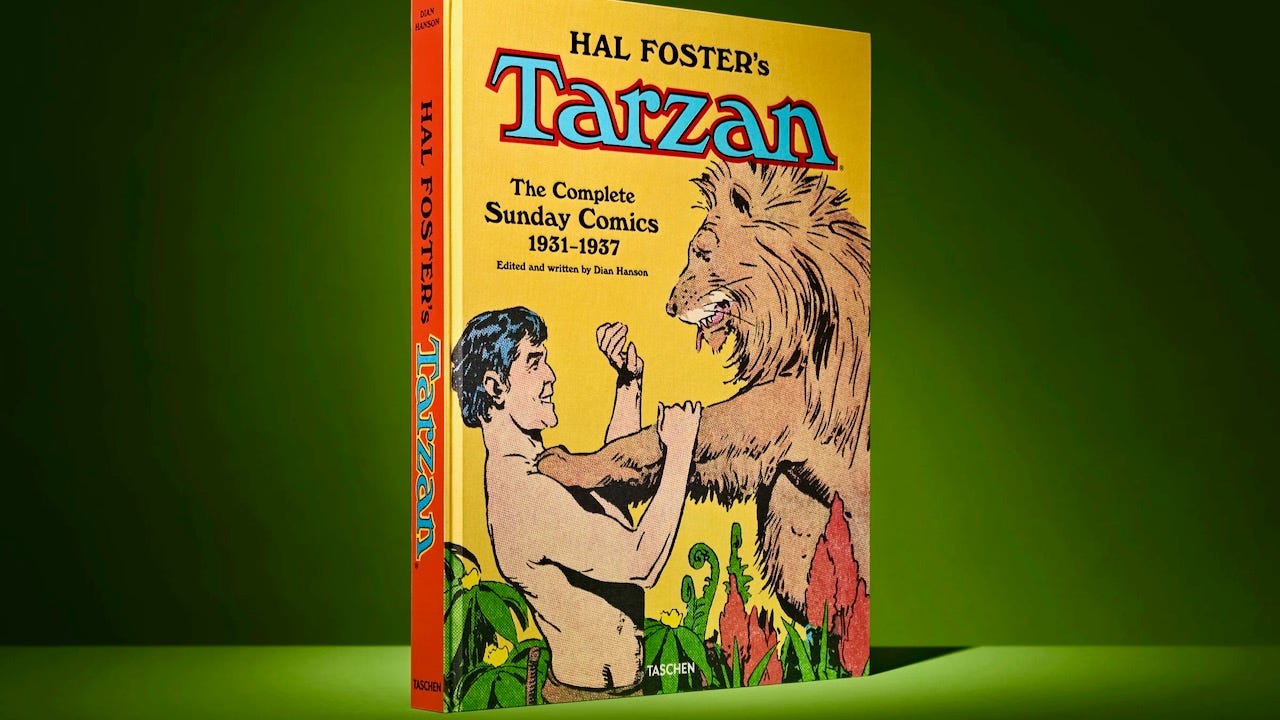
Some of those offensive prejudices are on display in Hal Foster’s Tarzan,a gorilla-size reproduction of the Sunday comic strips that ran from 1931 through 1937.This $200 volume from the art publisher Taschen weighs 11 pounds — or three coconuts.
The pages, 13 by 17 inches, are almost as big as the newspapers in which Foster’s comics once appeared. The book begins, in black and white, with young Lord Greystoke and his bride sailing from Dover to Africa in 1888. It ends, decades later, in color, when a white adventurer bombs an African city with poison gas and Tarzan refuses to surrender. (Foster was off to create Prince Valiant.)
Dian Hanson’s introduction gets bogged down in Foster’s testy relationship with United Feature Syndicate, but there are some adventurous highlights. For instance, Foster’s grandfather, Captain Edward Rudolf, ate one of his dead crewmates after a shipwreck.
Foster’s own life was considerably less traumatic. He taught himself to draw by looking at books and magazines at the public library and studying his own naked body reflected in his bedroom mirror.
“He learned to do it quickly,” she writes, “because he only had time to practice in the unheated room during winter.” (Clearly, there’s a story there.) Later, he perfected his art by drawing brassieres, corsets, sanitary belts, and bustles for the Hudson’s Bay Company catalog.
This may go a long way to explaining why the women in the Tarzan comics frequently appear in what could pass for underwear.
“Near-nudity was not the only shock Tarzan delivered on Sunday mornings,” Hanson writes. “Bloody battles, murders, and barely averted murders occurred weekly. The artwork grew rich as catastrophe piled upon catastrophe, all of it mirroring the decade’s global suffering.”
If you’d like my giant copy of Hal Foster’s Tarzan: The Complete Sunday Comics, be the 60th reader to send me an email with the subject line “Me Tarzan” (click here).◆
(Tor)
Literary Honors & Prizes
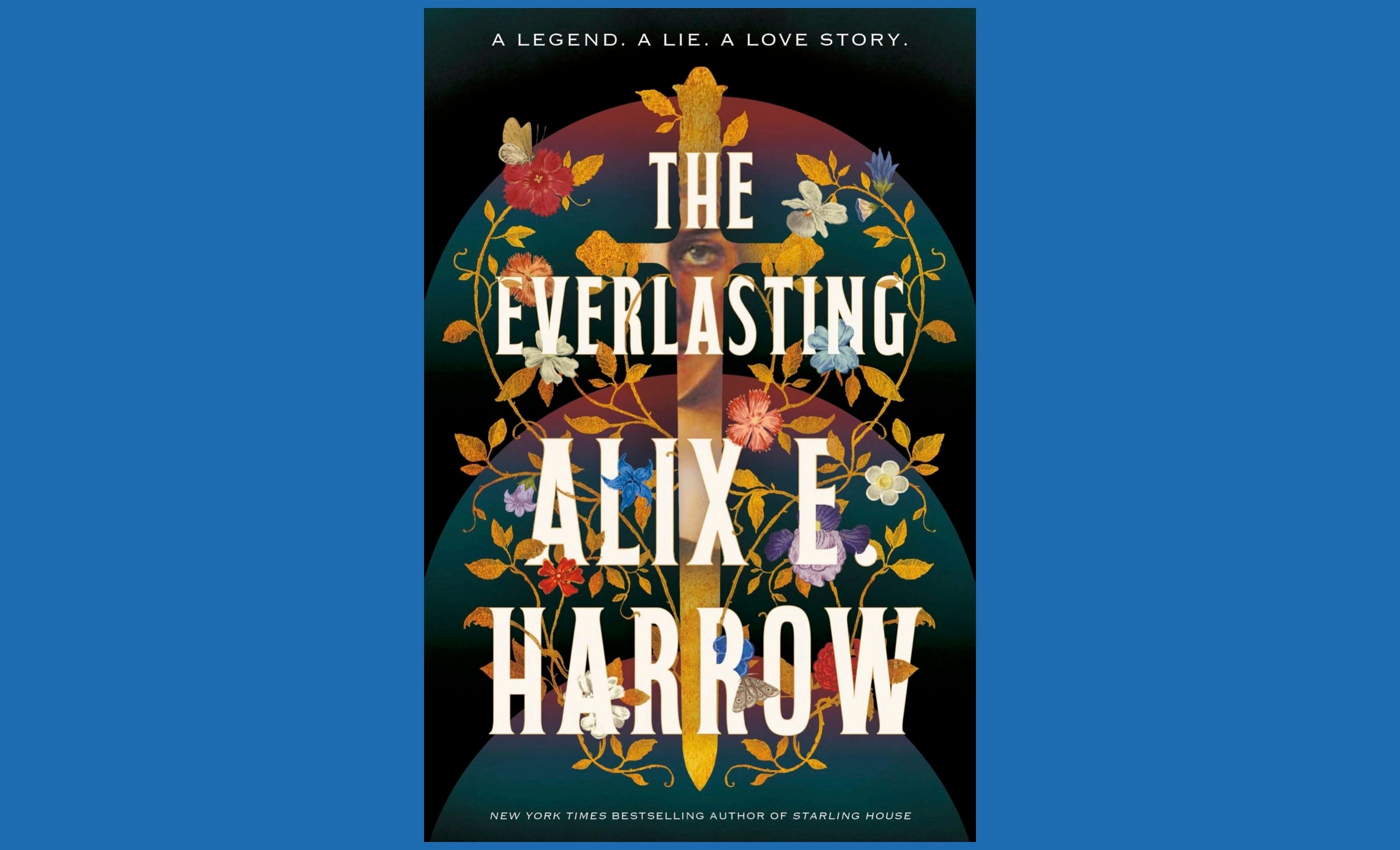
Alix E. Harrow’s The Everlasting was named Best Novel at the Hugo Awards ceremony, which celebrates the year’s finest science fiction and fantasy. Netflix is already working on an adaptation of The Everlasting about the relationship between a female knight and a scholar sent back through time. (Full list of Hugo winners).
At the Edinburgh International Book Festival, Josh Silver’s Traumaland won the YA Book Prize. The thriller, titled Erase Me in the U.S., is about a 17-year-old boy numbed by a near-death car accident who seeks out emotional stimulation in an underground club where members experience virtual reality trauma.
At a ceremony last night in Zurich, an international team of scientists won the Ig Nobel Prize in Soil Science for burying 1,000 pairs of underpants in more than 25 countries and then digging them up two months later to assess soil health. Each Ig Nobel winner received a foot mounted on a block of blue cheese. The ceremony was kept on schedule by the aggressive policing of three human-sized bananas. (Full list of ignominious winners). ◆
(Quill Tree Books)
Picture This
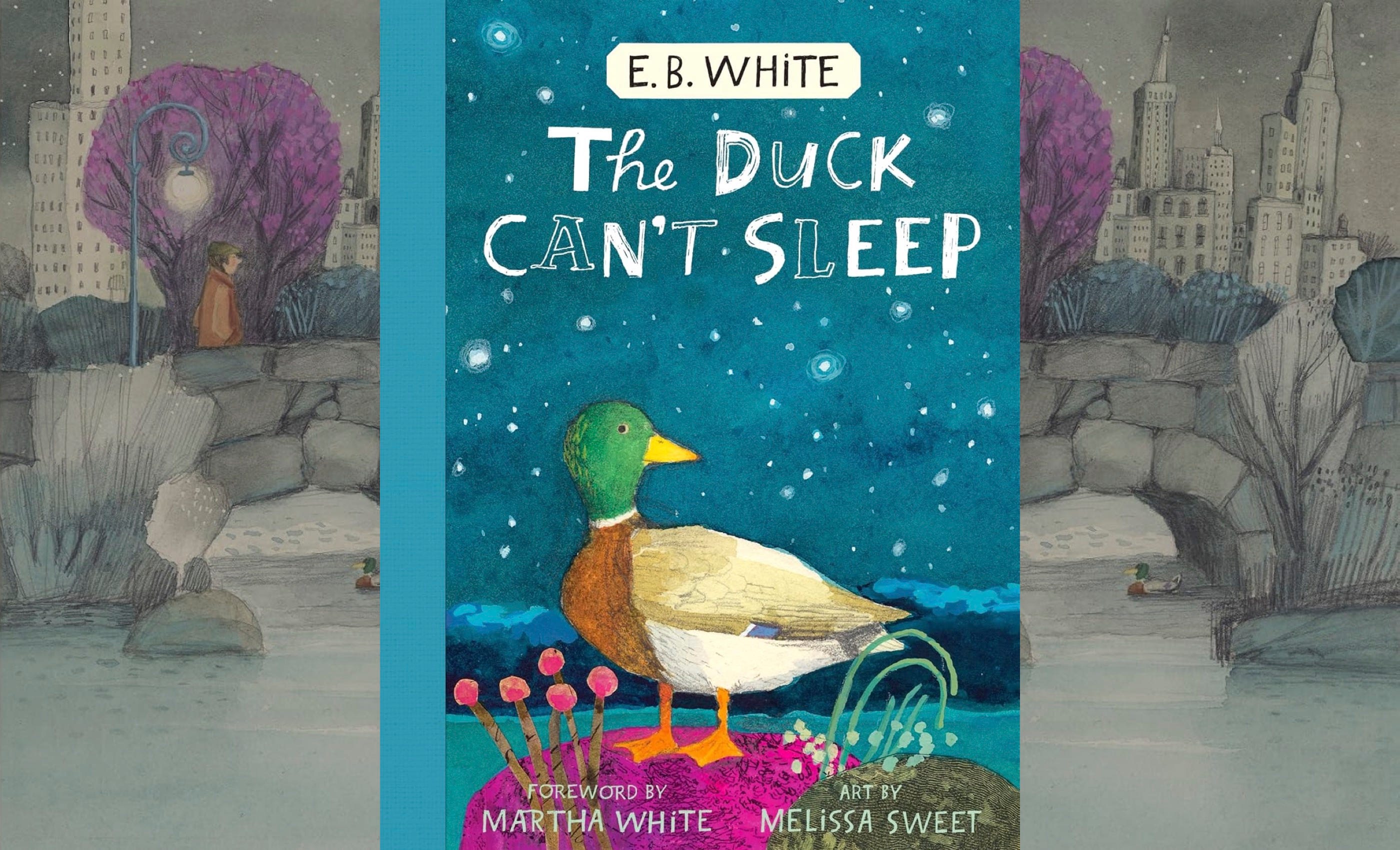
In 1928, a young man named E.B. White published a poem in an even younger magazine called The New Yorker.
In bouncy rhyming couplets, the poem describes a man walking around the Central Park Reservoir at midnight. His attention is caught by an equally restless duck:
Afloat at night upon the deep You’d think a duck would go to sleep.
You’d think a normal duck would hanker To close his eyes and ride at anchor.
The Latin title feels a bit much, “Natura in Urbe,” but it’s pure E.B. White, or what the world would someday recognize as E.B. White — gently witty and charmingly anthropomorphic, tinged with wonder and melancholy.
Tipping his hand just a bit, White writes, “Surely he would not swim and swim / Were something hard not troubling him.”
Then again, maybe not. “I like to think he swam the deep / Because he simply could not sleep.”
Sometimes insomnia is just insomnia.
White’s poem has just been released as a lovely picture book titled The Duck Can’t Sleep, with Melissa Sweet’s mixed-media collage and watercolor illustrations. (You may remember her 2016 illustrated biography, Some Writer! The Story of E.B. White.)
This edition includes a foreword by White’s granddaughter, Martha White, who reveals that a year after publishing “Natura in Urbe,” he wrote in his journal about walking around the Central Park reservoir wondering if he should quit his job and leave town. Presumably — and fortunately! — the ducks helped him make the right decision.
P.S. Katherine Rundell, a brilliant John Donne scholar who is also, inexplicably, a fantastic children’s book writer, has published a new edition of Why You Should Read Children’s Books, Even Though You Are So Old and Wise. This sprightly essay — bound as a wee hardcover book, perfect for gift-giving — explores the history of children’s literature and its persistent value. “We as adults,” Rundell writes, “must hasten to children’s books to be reminded of what we have left to us, whenever we need to start out all over again.”◆
(Longleaf Press)
This Week’s Poem
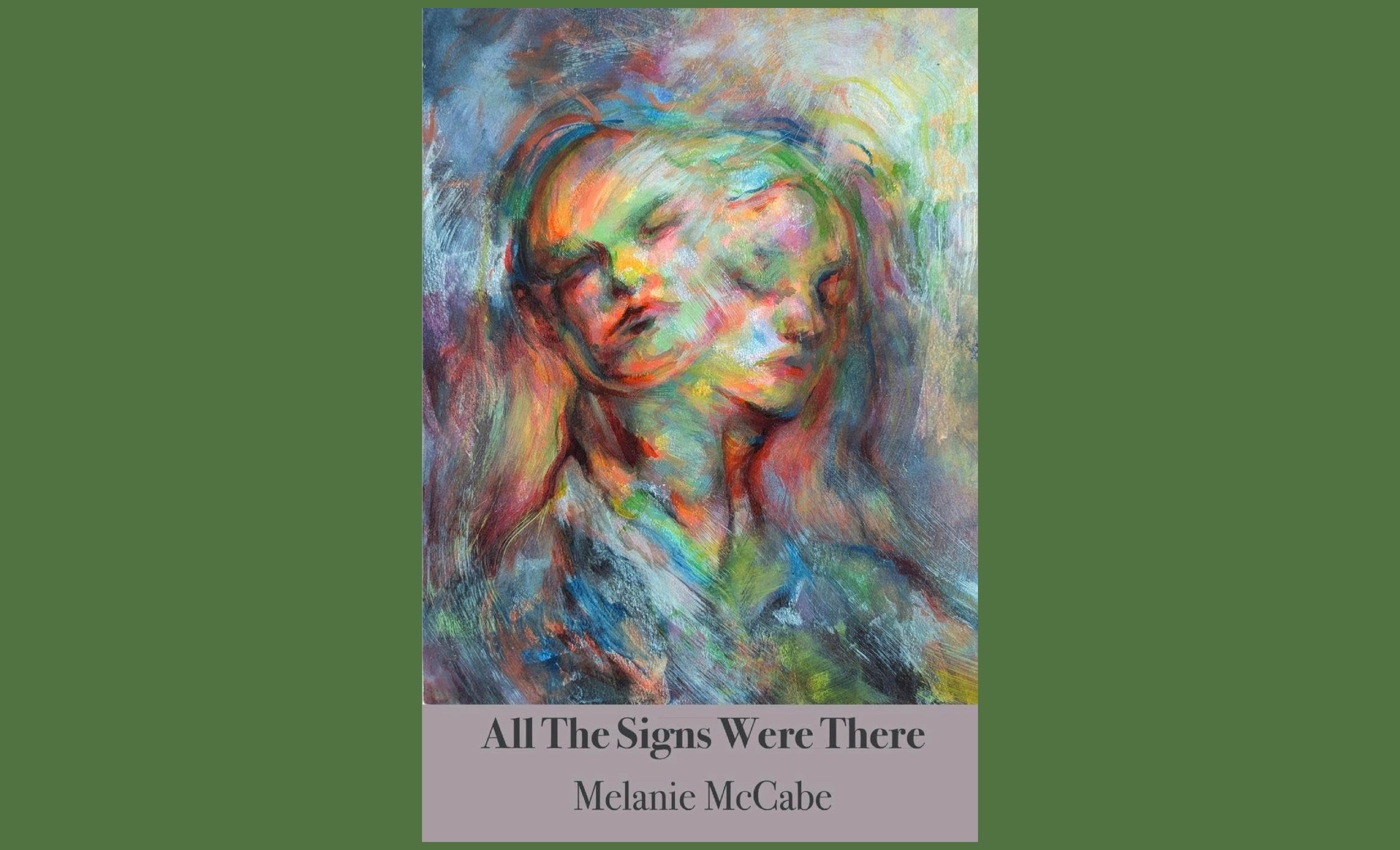
Melanie McCabe’s fourth poetry collection, All the Signs Were There, offers the wry perspective of a woman paying close attention to the joys and humiliations of ordinary life.
“My carefully constructed philosophy of survival: / be nowhere disaster expects to find me.”
But of course, it comes just the same.
To the Teenaged Clerk Who Gift-Wraps My Purchase
Your legs are an astonishment of blankness. One could make a hotel bed with the white of your skin. How will danger know where to nick this tundra, this alabaster, this soapstone? How have you managed all of these years
without pores? If there is a law of gravity, you have broken it. If the store had no roof, you would float away. You use a scissor blade to make ribbon curl into perfect ringlets. Fingers fold, tuck corners, smoother than ice
in the bourbon you’d need a fake ID to buy. Your toenails are painted pink. Of course they are. That lip gloss never unglosses, is never less than cherry. How is it possible that you have never bruised, sprouted, snagged, or blistered,
that you have starved mosquitoes with your bloodlessness? If your veins could be threaded and hung as wind chimes, would they clink in a gale like a table being set, knife against plate, crystal glass next to crystal glass?
How is it possible that you live inside that body so unaware, not yet understanding that this container that holds your cargo, your self, is a gift that will be taken away? You wouldn’t hear me if I told you, so I merely nod as you hand me my box,
bright explosions of ribbons bouncing across its top, nod again as you chirp, There ya go! The tiny bell of the shop door jingles as I step out into a dazzle of sunlight that creates my shadow. You were right, after all, in that farewell. There I go.
P.S. Later this month, U.S. Poet Laureate Arthur Sze will launch his “Words Bridging Worlds” tour, set to visit Honolulu, Minneapolis, Boise, and San Antonio. Each stop over the next few months will feature a public conversation and a poetry translation workshop. These events are free and open to the public (details).◆
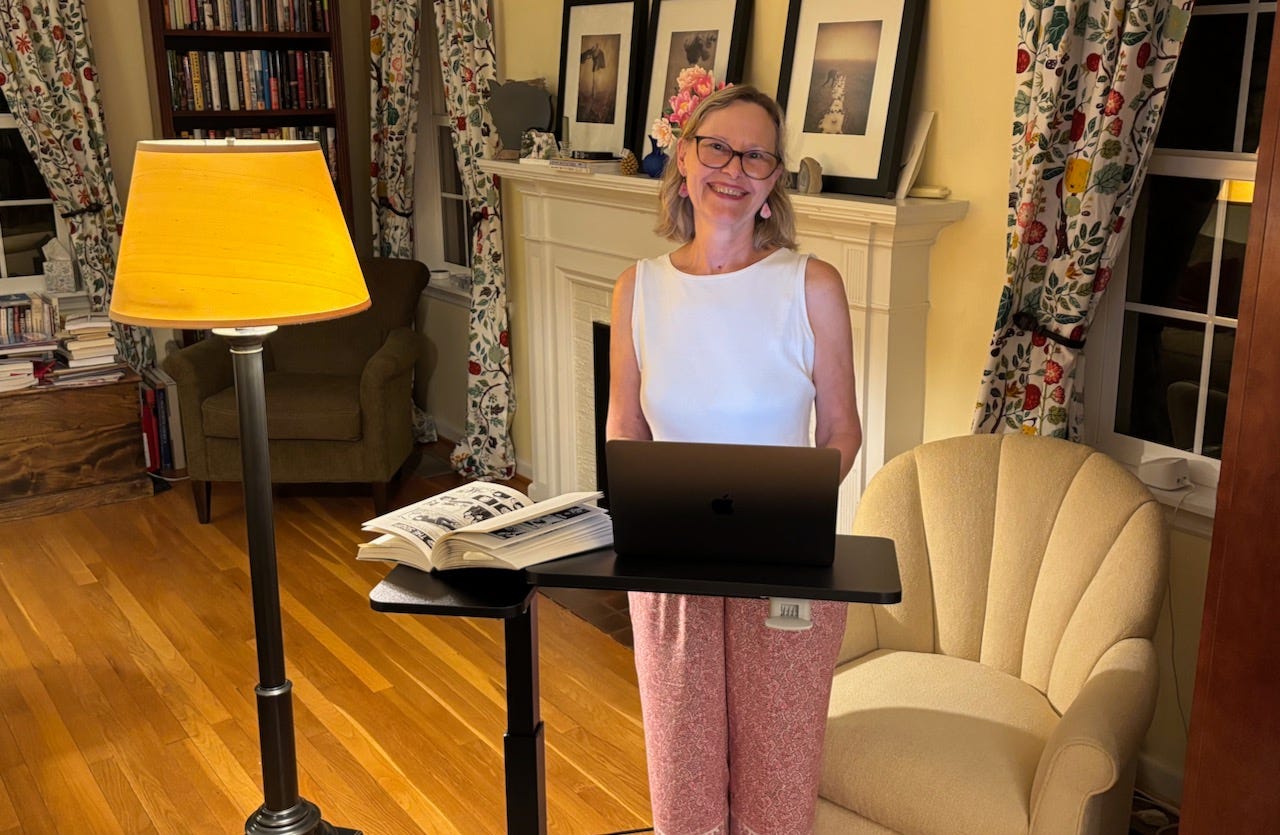
Dawn Charles prepares a lesson on “Persepolis: The Story of a Childhood,” by Marjane Satrapi, at her new desk.
Standing With Dawn
Determined not to spend so much time sitting, Dawn bought a small standing desk this week.
Since we already don’t drink, smoke, use salt, or eat red meat, there really aren’t that many pleasures left to give up. (Refrigeration? Paper clips?)
So far, the reviews on Dawn’s standing desk have been inconclusive. She likes the way it holds a book and her laptop, but standing all the time makes her weirdly self-conscious about standing all the time.
At school, she never sits down, but she never stops moving either. She works her classroom like an auctioneer, stand-up comic, and traffic cop combined.
Now I feel guilty about sitting around all day reading. It’s worse than smoking, you know, which must be true because I read it on the Internet. I’ll have to up the ante by getting a treadmill desk.◆
Clippings
This week’s review is The Disappearers, Marlon James’s monumental novel about homophobia, violence, and survival (review).
Bookshop.org, the mission-driven alternative to Amazon, has now raised $50 million for independent bookstores. Where you shop matters.
Of all the things I did not believe last week, this is the thing I did not believe most: “One aide to the president said Trump has become a reader of presidential biographies.” — The Wall Street Journal, Aug. 28, 2026.
P.S. I’ve discovered that I should have been collecting sales tax on subscriptions sold in a few select locales. The threshold in D.C., for instance, is $100,000 or 200 transactions. Alas, I don’t have anything close to $100,000 in sales in D.C., but just 34 monthly subscribers would produce more than 200 transactions in six months.
Anyhow, I’m not complaining; this is a good problem to have. But it’s a maddeningly complicated one, too, and I don’t want anyone who sees a new sales tax charge to be surprised. Same if you see this newsletter coming to you from prison.◆
Welcome back to another delightful installment of everyone’s favorite bimonthly drunken advice column, Am I the Literary Asshole? It’s a column designed to bring hope, faith, and a love of happy hour libations to all God’s favored children (that’s us, in case you were wondering). I’m your host, Kristen Arnett, and I’m happy to say that I made it out to Austin for my teaching gig at the Michener Center! The temperatures here are higher than Florida, if you can believe it. My humidity levels are at an all-time low, which means this swamp rat has started drinking copious amounts of water to deal with the heat. I know, I couldn’t believe it, either. Water! Apparently all the most hydrated kids are doing it.
Speaking of water, why don’t we help ourselves to a couple of the ranch variety and crack those open, then get straight to sipping? Some nice questions on the docket today. Let’s jump right in, folks:
1) Maybe you’ve gotten asked this before and I missed it, but on the off chance you haven’t how can I tell if an editor has sent me good edits or bad and unhelpful ones? I’ve had a piece accepted by a publication, and while I’m excited to have my work out in the world, the person who’s been editing me has a lot of things they’d like changed before it’s ready for pub. Yesterday they sent over a google doc filled with all kind of comments and even big sections that have been marked for deletion.
Oh, this is a great question! And definitely not one I’ve answered before, so thanks for submitting it.
I know very little about the work in question here (don’t know what it’s about, where you are in your career, how many times you’ve published before, if you’ve worked with other editors on projects in various levels of completion, etc). What I can tell you, however, is that there are ways to distinguish between a good edit and a bad edit, even if we’re talking about writing that might need a little more finessing and time put into it than others.
A good editor is someone who offers feedback and suggestions that enhance the work that you’ve already crafted. They see your vision. They understand what you’re trying to make and want to help your particular voice shine through. They ask helpful questions.
Does that mean making some deep cuts? Occasionally, sure. Deleting extraneous sections that veer away from your chosen topic can tighten the piece and make your points more salient and clear. These large-scale edits happen to everyone at one time or another. When we’re excited and making something we can get lost in the weeds. A good editor holds the map in their capable hands. They keep us fixed on the right path.
Now, is it true there are bad editors? Yes, or at the very least, they’re a bad fit for you and your work. A bad fit editor takes what you’ve made and tries to turn it into something they would write. Instead of helping you build your own thing, they take over the design and try to make it square with their own tastes and ideas. But again, truly, this isn’t often the case. And you can ask follow up question to either confirm or deny this. Do you feel that they understand what you’re trying to build? Can they articulate what the piece means to you and what is most important to the text? If they cannot, that could be a red flag.
But I’d urge you to take a hard look at these edits you’ve received and ask yourself, very sincerely, if they’re really all that bad. Lots of notes doesn’t mean you’ve been given a bad edit. It could indicate that you’ve submitted something that needs a lot more work than originally anticipated. Be honest with yourself. Be receptive to well-meaning feedback and criticism. In a world of steadily diminishing artistic practices, we are so goddamn lucky to have editors. Everyone’s work needs an edit, myself very much included. Go forward in good faith. And unless someone shows you otherwise, trust that this editor has your best interests at heart.
Let’s head back to the ranch for another of their famous waters. Next caller:
2) Hey Dad! I’ve been working on a novel for several years now. As time has passed and I’ve continued drafting, I’ve come to the realization that this is actually two different books. Do I just throw the whole thing out?
This is a tough one. You’ve spent a lot of time with this project; you’re the one who knows it best. I can’t answer if this is actually two different books because I haven’t spent any time with this work, and I don’t know your writing, or how you talk to yourself about it. It’s absolutely possible that the writing has divided itself into two separate camps. Maybe this is a project that took on too much life and needed to be focused on one idea or the other. But again, there’s no way for me to know any of this because I haven’t read any of it.
However, I have to wonder if you might sit with this for a moment and consider what’s caused you to make this assessment. Is it because you truly feel like it’s two separate projects? Or are you nervous because it feels big and that scares you? Have you worked on one part longer and it’s starting to drag you down? Is one part newer to you, and subsequently fresher feeling, and you want to work on it instead because it feels more exciting?
Listen, novels take on lives of their own. That’s how we know they’re actually doing something important and significant. It should be kinda scary to write a novel, because it means it’s large and takes up space and time and care and a big chunk of our lives. It’s completely possible you’ve discovered that you’ve been writing toward the wrong end. And yes, that means you need to pick up the single thread and discard the other. Only you can be the one to really know the answer. You gut will tell you the truth.
But! Listen to your gut. Does it really feel like two different books? Or are you worried that you must choose a single path to make the project happen?
If it’s the latter, try to stick with it. To sit with it. At least for a little while. Wrangle it a bit, my friend. It can be easier to tell ourselves that we don’t have the chops to do something. Much harder to try. Get excited about being scared. No good art is made in a space where risks aren’t involved.
Okay, last drink? Let’s toast and then have an actual water after we do this last question; for real, I’m incredibly dehydrated:
3) I have a workshop cohort (many of them longtime writing friends from a program) and we share work quarterly. My last submission was a speculative story that leaned more horror, which is a new style for me. When we met up to discuss, there was a lot of talk about how funny the story was. I did not mean for it to be humorous. Like, not at all. The whole thing made me sick. Which then made me embarrassed. I don’t think anyone was trying to be mean (or an a**hole, per your column), but where do we go from here?
Buddy, I’m sorry they hurt your feelings!
The important note here is that you don’t think anyone did this on purpose. We can work with that. Because you don’t have to leave your writing group over it. And you don’t have to stop writing what interests you and what makes you excited about art, either!
What I am going to encourage you to do is have an honest conversation with everyone involved. Notice I said “honest” here, not accusatory. What I want you to do is let everyone know that you’re trying something new out, stylistically, and would love it if future feedback could take that into account. I don’t know exactly how your group runs things—each writing collective is different—but perhaps you could even offer up your own questions at the start of each review. Things that you feel would actually be helpful to know in lieu of a broad sweep of critique.
Mostly I’d like you to take heart. Not everyone thinks the same things are scary. Not everyone laughs at the same things, either! And it’s completely possible that the people in this particular group aren’t your readers when it comes to speculative or horror. But please, before you write them and this endeavor off completely, have this hard conversation. I think you’ll be (pleasantly) surprised how well things turn out.
And that’s our show, folks! Join me next time when I’ll be answering more of your pressing questions (send those anonymous ones HERE) and hopefully I manage to cool down while I continue to hydrate.
Kristen Arnett has a pretty good, short answer for an author who asks how they can know if they're dealing with a good editor or a bad editor. (The problem, maybe, is that we don't carry clear signals, like sparkly pink wands or pointy black hats.) It's the first of three answers this week in the linked column.
Castro (Barbie, 9-1-1) will receive the Humanitarian Award for his commitment to community, education and creating opportunities for others through culinary arts. Reilly (American Horror Story, Obi-Wan) is set for the President’s Award, recognizing exceptional contributions to the property craft by a professional outside the traditional property master role. The Lifetime Achievement Award will go to Wilkinson (Titanic, eight Harry Potter films), celebrating a remarkable career spanning more than four decades and some of the most iconic films in British and international cinema. Read more about them below.
“The MacGuffin Awards are about recognizing the people whose creativity, generosity and dedication help define our craft, both on set and beyond it,” PMG President Jeffrey Johnson said. “Luis, Trish and Barry each represent a different and invaluable part of what makes the property community so special. Their careers and contributions reflect the skill, ingenuity and spirit that we are proud to celebrate.”
Watch on Deadline
The MacGuffin Awards honor the creative excellence and impact of prop masters across film, television, commercials and more.
Here are mini-bios on the 2026 career honorees, provided by the Property Masters Guild:
Luis Castro, Humanitarian Award
Born and raised in Puerto Rico, Luis Castro moved to California at 15 and developed a passion for the culinary arts. He earned an Associate of Arts degree in Culinary Arts & Restaurant Management from Los Angeles Trade–Technical College and spent more than 25 years in the food industry as an executive chef, private chef, culinary instructor and restaurant owner.
Over the past decade, Castro has transitioned into food styling for film and television. A member of IATSE Local 44 since 2021, his credits include This Is Us, Westworld, 9-1-1, Bel-Air, Paradise and Barbie.
In 2024, Castro founded Imagine Cookin, an in-home cooking class company serving neurodivergent individuals of all ages. The program uses culinary education to build confidence, independence, creativity and life skills while introducing students to potential careers in the culinary arts. Now employing eight people and serving 50 students, Imagine Cookin reflects Castro’s commitment to creating opportunities and empowering others. He also volunteers to advocate for authentic Latinx representation within the industry.
Trish Reilly, President’s Award
A lifelong love of cooking and a deep familiarity with the motion picture industry have shaped Trish Reilly’s career as a food stylist. Born in Montreal and raised in Toronto, Reilly moved to California as a teenager, inspired by her mother’s passion for cooking. Her connection to production also began early through her husband, key grip Dan Reilly. She started her career assisting on commercial shoots before quickly establishing herself as a skilled and inventive food stylist.
Reilly works at the intersection of props and food, creating inventive and often unconventional culinary elements for the screen. Her credits include Obi-Wan, Rebel Moon and The Orville, as well as the gruesome culinary creations of Grotesquerie and drinkable blood for American Horror Story.
Her work regularly calls for ingenuity, precision and close collaboration with Property Masters and production teams, whether creating paleo dog food for an actor or an apple pie with no apples. Her creativity, passion and unwavering commitment to perfection have made her a distinctive and valued contributor to the property craft.
Barry Wilkinson, Lifetime Achievement Award
Barry Wilkinson retired following more than 40 years in the property department, during which he worked on more than 70 films, serving as Property Master on many. His credits include Titanic, Indiana Jones and the Temple of Doom, Who Framed Roger Rabbit, two James Bond films, including GoldenEye, and all eight of the original Harry Potter films.
In recognition of his extraordinary career, Wilkinson received the BAFTA Lifetime Achievement Award and was presented to Queen Elizabeth II at a reception honoring individuals who have made significant contributions to British film.
Throughout his career, Wilkinson collaborated with some of the industry’s most celebrated filmmakers and performers, including James Cameron, Steven Spielberg, Marlon Brando, Bruce Willis, Robert Mitchum and Julie Andrews. His four decades of work span some of the most influential productions in British and international cinema, leaving a lasting legacy within the property department and the wider filmmaking community.
Read More About:
Subscribe to Deadline
Get our Breaking News Alerts and Keep your inbox happy.
By continuing to use our services, you agree to the PMC Terms of Use, including waiver and arbitration. PMC, its service providers, and third-party partners process information about you and how you use our services, including clicks and screen recordings, using first and third-party cookies, pixels, and similar technologies. Where applicable, you can opt out of certain uses of cookies via the Your Privacy Choices link in our footer. Learn more about our data practices in our Privacy Policy.
Your Privacy Choices (Oregon Residents)
As explained in our Privacy Policy, we and our ad partners collect certain information from our visitors through cookies and similar technologies and share it with third parties or combine it with information from other businesses to deliver more relevant ads to you and for related advertising activities. We may also share certain contact information for these purposes. This is known as “sharing” your personal information (“PI”) for targeted ads and may be considered “selling” PI under applicable law. We also process certain sensitive PI for advertising purposes. We may also sell or license certain information, such as contact or subscription information, to third parties to provide you offers and opportunities that may interest you.
If you are an Oregon resident, to opt out of these activities to the extent they are a "share" or sale and limit our use of your sensitive personal information on this service, use the toggle below. If you want to opt out for information that is not cookie based, please complete this opt out form below.
Privacy PolicyOpt-Out Form
Manage Consent Preferences
Strictly Necessary Cookies
These cookies are necessary for the website to function and cannot be switched off in our systems. They are usually only set in response to actions made by you which amount to a request for services, such as setting your privacy preferences, logging in or filling in forms. You can set your browser to block or alert you about these cookies, but some parts of the site will not then work. These cookies do not store any personally identifiable information.
Allow the Sale or Sharing of Personal Data
Move the toggle to the left (grey color) and click "Confirm My Choices," to indicate that you do not want us to sell or process your personal information for targeted ads as described above. You must indicate your choice on each computer/browser you use to access our services and fill out the opt out form above for non-cookie based data. If you clear your cookies or your browser is set to do so, you must opt out using the toggle again.
Performance Cookies
These cookies allow us to count visits and traffic sources so we can measure and improve the performance of our site. They help us to know which pages are the most and least popular and see how visitors move around the site. All information these cookies collect is aggregated and therefore anonymous. If you do not allow these cookies we will not know when you have visited our site, and will not be able to monitor its performance.
Targeting Cookies
These cookies may be set through our site by our advertising partners. They may be used by those companies to build a profile of your interests and show you relevant adverts on other sites. They do not store directly personal information, but are based on uniquely identifying your browser and internet device. If you do not allow these cookies, you will experience less targeted advertising.
For years — almost since before the Flood — I’ve been receiving emails intended for the Rev. Dr. Ron Charles, a biblical archaeologist and missionary who has written about his search for Noah’s Ark in Turkey.
My questions about that endeavor are 300 cubits long, but that’s beside the point. The real miracle is the gumption of publicists who tell me they understand Dr. Charles’s books so well that they can help me sell more copies.
Thus began my relationship with Reese Witherspoon.
In April, I got an invitation from Sofia Brown, who said she “partners with Reese’s Book Club x Hello Sunshine.” Sofia really liked Dr. Charles’s Chasing Jesus, a chronological account of Jesus’ life.
“Your approach,” she wrote, “encourages readers to engage not only with the story itself but with the process of uncovering meaning, reconciling perspectives, and exploring the intersection of history and belief” — always nice to hear, even if it’s not your book.
She was offering me the chance to feature Chasing Jesus in her upcoming community reading challenge.
“Our community is drawn to works that inspire meaningful reflection and thoughtful discussion, particularly those that explore profound questions of identity,” which certainly seemed relevant in my case.
She signed off, “We believe,” which I believe because after explaining to Sofia that I’m not the author of Chasing Jesus, she invited me three more times. Her faith, it seems, is unshakable.
And then, lo and behold, Reese Witherspoon began writing to me.
She was fascinated with Dr. Charles’s The Search: A Historian’s Search for Historical Jesus.
“As I explored the book,” she wrote, “I couldn’t help but imagine how effectively its ideas could be translated into a visual documentary, historical drama, or educational series.”
Out of curiosity, I wrote back asking what the next steps would be, but after several rounds, I explained, “Just remember, I don’t really know anything about The Search, because I’m not Dr. Ron Charles; I’m Ron Charles, the former book critic for The Washington Post.”
What I’ve always admired about Reese Witherspoon is her persistence, and sure enough, she wasn’t about to let a little mistaken identity stand in the way of a promising Hollywood project.
“I sincerely apologize for the mix-up,” she wrote. “Since we have already started this conversation, I would still be very interested in learning more about your own writing and literary work.”
Finally!
“Do you think,” I asked her, “that a collection of my book reviews could be made into some kind of ensemble serial TV show?”
I was imagining something like White Lotus, but with quibbles.
“Yes, absolutely,” Reese Witherspoon replied. “Please send me the PDF or compiled collection of the book reviews you have in mind.”
After “going through the material very carefully,” she wrote back to me: “Dear Richard Russo...”
Hurt but unwilling to give up my dreams of television success, I explained that I was the book critic Ron Charles, not the novelist Richard Russo.
“I sincerely apologize for the misunderstanding,” she replied. “Your idea of developing your book reviews into an ensemble TV series is certainly something I would be interested in exploring further.” And then she signed off as Jackson Stephen.
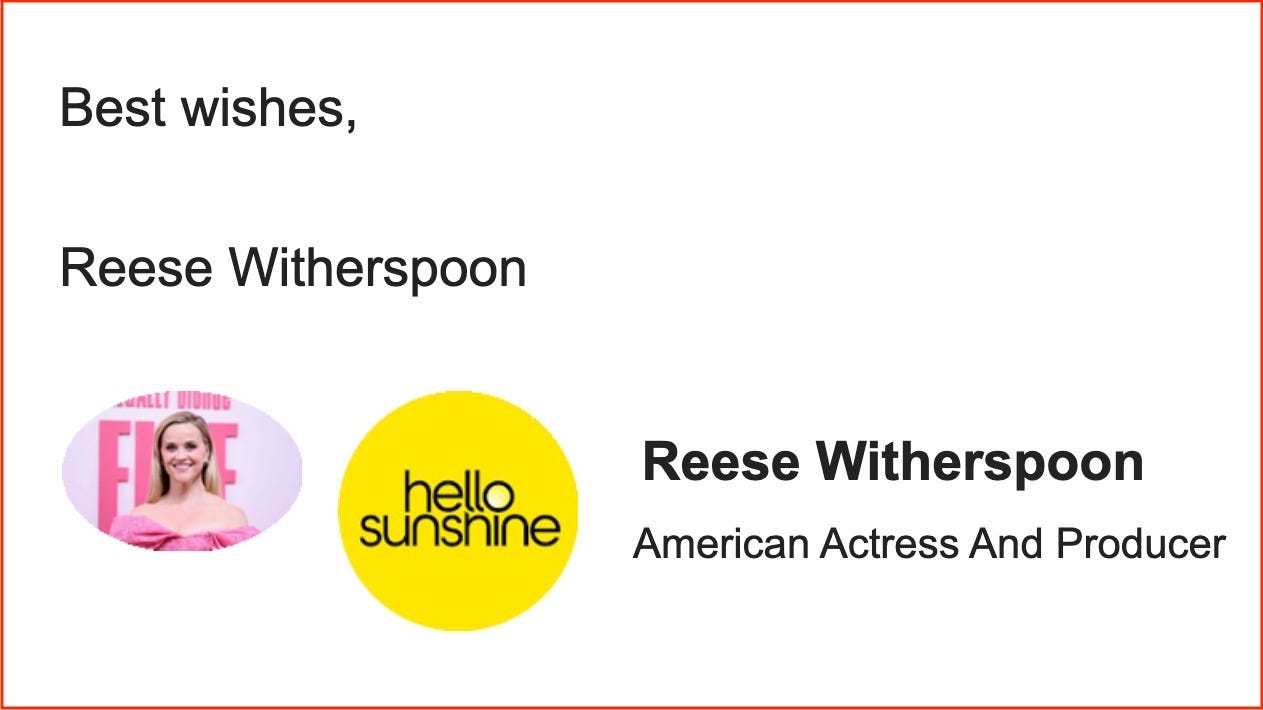
When I asked about that strange name change, she wrote back, “I apologize for the confusion. I’m Reese Witherspoon, an award-winning American actress, producer, and media entrepreneur,” which is perfectly understandable because who among us hasn’t suddenly started using another person’s name?
Anywho, the time for me to connect with a Film Creative Documents Master had arrived!
Jackson Vill would help me explore turning my “book reviews into an ensemble television series.” The first step, he explained, is to “establish the series concept, its world, characters, story direction, episode potential, and overall presentation.”
Which he was eager to do as soon as I chose an editorial package and transferred $750, $1,500, or $2,500 to Sodiq Ajisefinni at Lead Bank in Kansas City, Mo., where most of the great TV shows are developed.
When I finally stopped responding, Jackson asked, “Are you there, Ron Charles?” which is just the sort of searching, existential question Reese Witherspoon loves to explore.
Check your local listings.◆
If this newsletter has become something you look forward to each week, please consider becoming a paid subscriber. Your support makes my work possible.
The rest of the newsletter follows below.
Books Go to the Movies
The Magic Faraway Tree, starring Andrew Garfield and Claire Foy, has glimmered into theaters (trailer). The movie is an adaptation — and modernization — of Enid Blyton’s fantasy series, which began appearing in 1939, about three siblings who move with their parents to the countryside where they discover elves, gnomes, and a very capacious tree. Hurry up: Two sequels are already planned.
Franz, directed by Agnieszka Holland, opens today in select theaters (trailer). The movie, in German and Czech with English subtitles, drifts through time, capturing the metamorphosis of Franz Kafka’s life from childhood to his death in 1924.
Sunday evening on AMC+, the undead will rise again for The Vampire Lestat: One Night Only Live (trailer). The concert, filmed at New York City’s Beacon Theatre on June 2, features Sam Reid as Lestat singing songs composed for the AMC+ vampire series based on Anne Rice’s immortal novel.◆
(Courtesy of the Library of Congress)
Bookworms Unite!
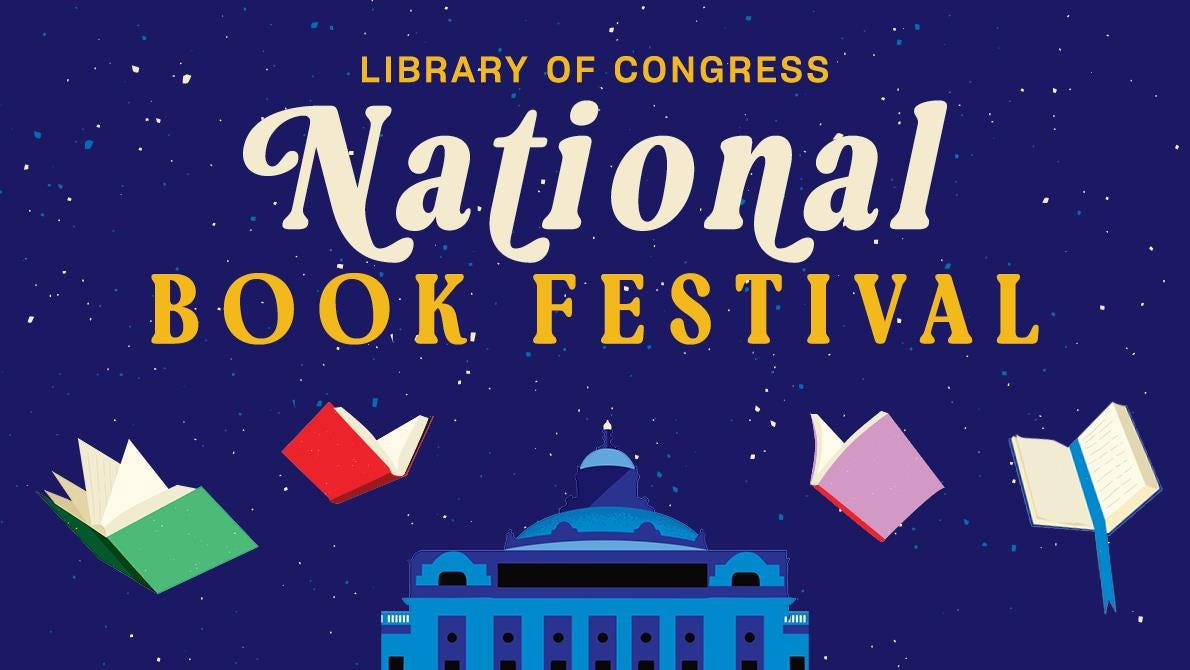
The National Book Festival opens tomorrow in Washington with more than 80 novelists, poets, children’s-book writers, illustrators, and other cultural figures, including Martin Scorsese (full list).
The festival, sponsored by the Library of Congress, is a book clubber’s dream. In one day, you can hear Ann Patchett, Andrew Sean Greer, Tayari Jones, Tom Perrotta, Patrick Radden Keefe, Annette Gordon-Reed, Douglas Brinkley, Kai Bird, Beverly Gage, and so many others — all you have to do is figure out how to be in several different rooms at the same time (interactive schedule).
And by all means, bring the kids. They’ll love meeting Mac Barnett, Shannon Hale, Meg Cabot, and Rex Rocket, the Cosmic Wiener Dog.
But don’t just flock to the marquee names. A trusted friend tells me that every mystery-lover she’s directed to Tim Sullivan’s books goes “totally nuts” for them. The filmmaker and writer, who self-published his first two novels, will be at the festival to talk about “The Tailor,” the eighth detective novel in his DS George Cross series.
Poets are making an especially strong showing this year. Fresh off her role as both the muse and the murderer of Christopher Nolan’s The Odyssey, translator Emily Wilson will appear with U.S. Poet Laureate Arthur Sze. He’ll be discussing his recent book, Transient Worlds: On Translating Poetry.
And I’ll be talking with Sasha Waters about her new documentary, Mary Oliver: Saved by the Beauty of the World. She’ll present video clips of Oliver reading her work and conversations with people who knew her, including John Waters (trailer).
(Dept. of Small World: Yesterday morning, while eating French toast at 7a Foods on Martha’s Vineyard and shamelessly eavesdropping, as one does, I ended up meeting Allie Humenuk, a documentarian who shot additional footage for Waters’s film.)
The National Book Festival extravaganza at the Washington Convention Center — 9 a.m. to 8 p.m. Aug. 22 — is open to the public, but remember: You must have a free ticket to enter (get them here).
Of course, most of you aren’t in the Washington area, but this is your festival, too. The Library will livestream events throughout the day, and eventually all the presentations will be on the Library’s website. C-SPAN’s Book TV will also broadcast live from the festival.
Tonight, if I make it back from Martha’s Vineyard in time, Dawn and I will be at the festival’s opening celebration in the Jefferson Building — cocktails, a dinner reception, and remarks from a few of the authors, including the hilarious Jenny Lawson. This will be my first year attending the hoity-toity soirée as an independent journalist. I’ll be stuffing extra canapés in the pockets of my polyblend black suit.
P.S. In 2014, the Park Service threw the annual book festival off the National Mall for fear it was harming the grass. This weekend, while readers amble around the Washington Convention Center with their totes, the National Mall will host the inaugural Freedom 250 Grand Prix IndyCar street race.◆
(Orchard Books)
Picture This
When I was teaching at a small Christian college in the Midwest, Dawn and I invited some friends to a Kraft Mac & Cheese dinner party where we served bowls of Kraft Mac & Cheese from around the world — France, India, Argentina, etc.
Of course, each bowl was exactly the same, which we thought was terribly witty. But what can I say? It was a dry campus. The next most exciting event was the Sunday hymn sing.
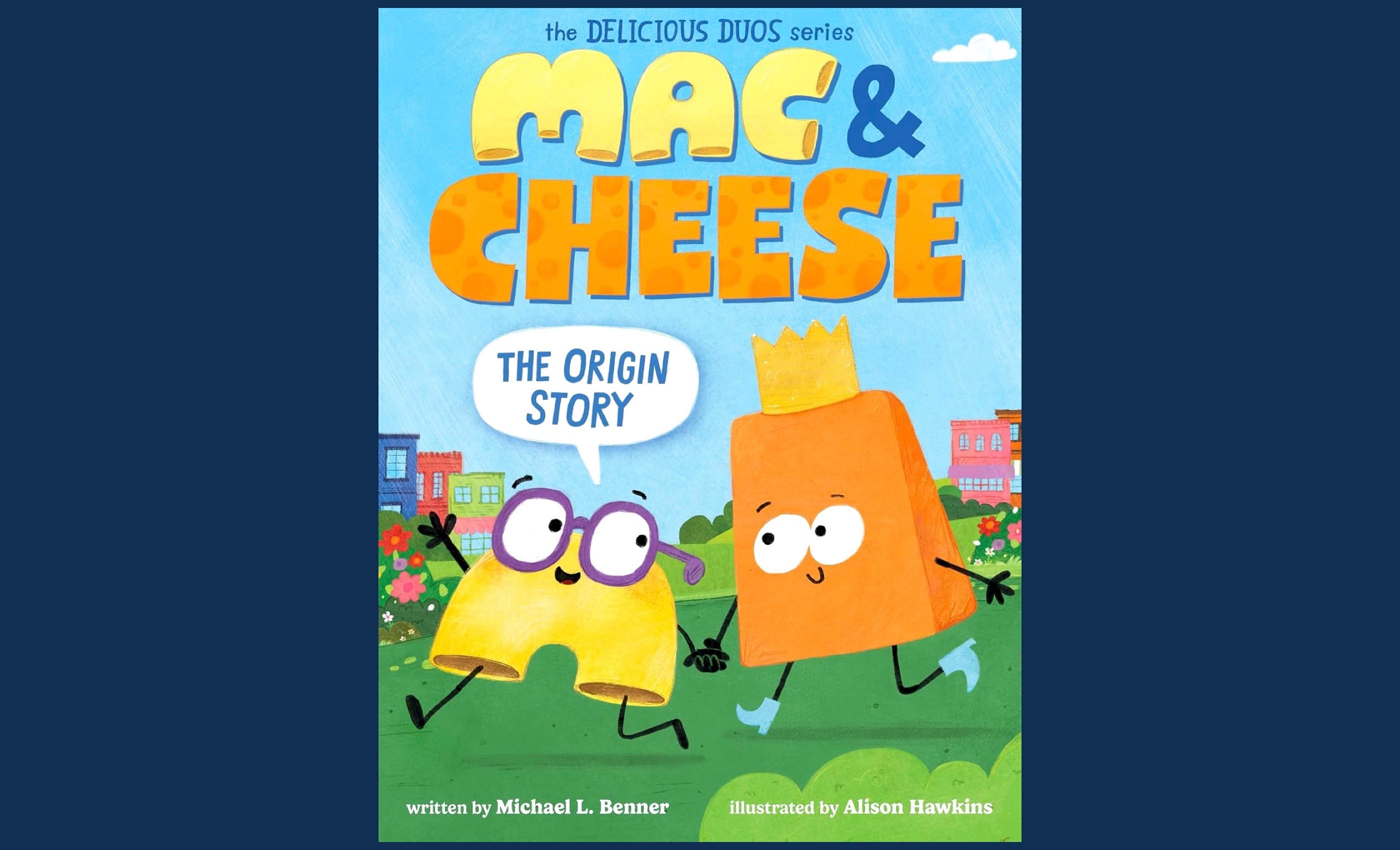
Now I want to throw that party again and invite Michael Benner and Alison Hawkins. They’ve just published an exceedingly silly picture book about the origins of Mac & Cheese.
At the start, Mac is a friendly noodle in Pastaland who needs a friend. He sets off across the Sea of Snacks, but he can’t find anybody who appreciates his groan-worthy jokes.
What do lazy noodles do all day? They lasagna couch and pasta time!
Meanwhile, in Quesoland, King Cheese was feeling provolonely. “This is aging me,” he sighs.
I don’t want to give anything away, but if you use your noodle, you’ll see where this is going.
Mac & Cheese will delight the budding punster in your family even more than a creamy bowl of you know what.
I can’t think of a single bit of cheesy wordplay left unuttered in this story. It’s not just great; it’s grated.◆
(W. W. Norton)
This Week’s Poem
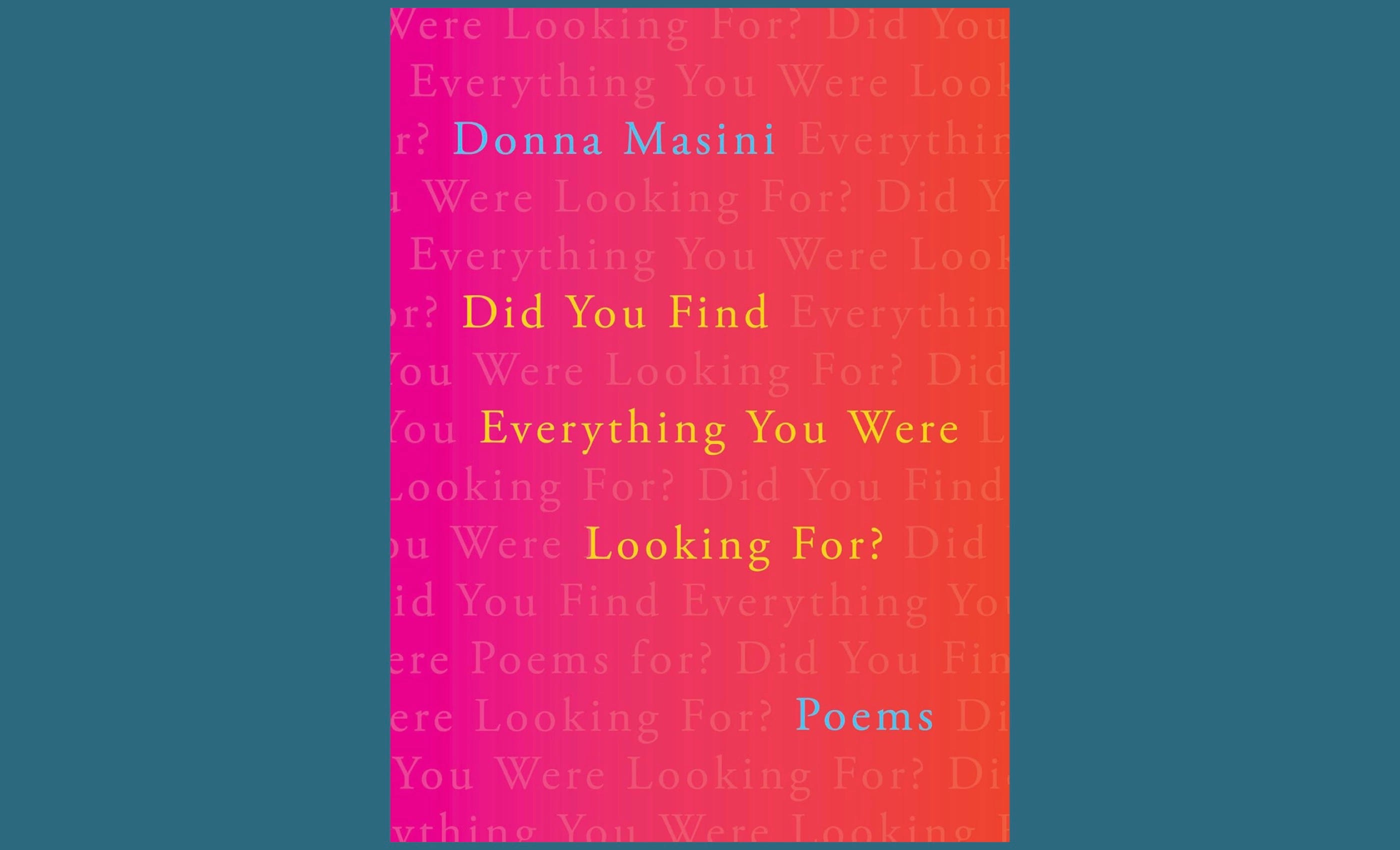
The sly wit in Donna Masini’s new collection starts right there in the title, Did You Find Everything You Were Looking For? She possesses an extraordinary gift for turning ordinary phrases and events in a light that illuminates their strange depth.
Beauty parlors, classrooms, a restaurant after hours — these are the everyday places Masini hangs out to explore “the democracy of grief.”
In one poem a woman “wonders / whether anyone uses the nylon sheath / that comes with a new umbrella,” and a moment later we look up to realize she’s talking about the “flimsy precarious parasol of thought” that keeps tragedy at bay.
Errands
I tried to ignore her, pleading old woman leaning on a tree guard
holding out a plate. I had no cash. It was hot. Late. So much to do.
Laundry, library, pharmacy, pet shop. I was lonely and limping,
my bags were tangled, and my friend had just died.
It was a sparrow — struggling, dust-brown, size-of-a-baby’s-hand
shudder of feather stuck to a glue trap.
Please, she said, help me. She was shielding the bird
the way you hold your hand around a lit candle. Never touch a bird,
I learned as a girl. I dropped the bags. I touched the bird,
the beating chest feathers, tried to peel the trap from its twiggy
leg, slowly, the way you ease a Band-Aid off. The bird — I barely saw it —
shot up, swooped up, up into the tree, onto the fire escape,
the pet store sign swinging above us, then — gone!
A residue of feather stuck to the trap. We saved her,
the woman said. She touched my arm. I’m almost blind, she said.
She must have heard the bird, felt for the sound under the parked car.
How long had she knelt there, waiting, between the tree guard
and parked car, how had she felt for it among the cigarette butts
and gutter trash? How had she heard it above the racket of traffic:
Honeycrisps and Pink Ladies had rolled out of my grocery bag
and lay, shining, on the late sidewalk. Days I’d been waiting for a sign —
which might be why I thought of Jon. How busy the dead must be
at the beginning of being dead. So much to do. Even after you die.
So much we need you to do.
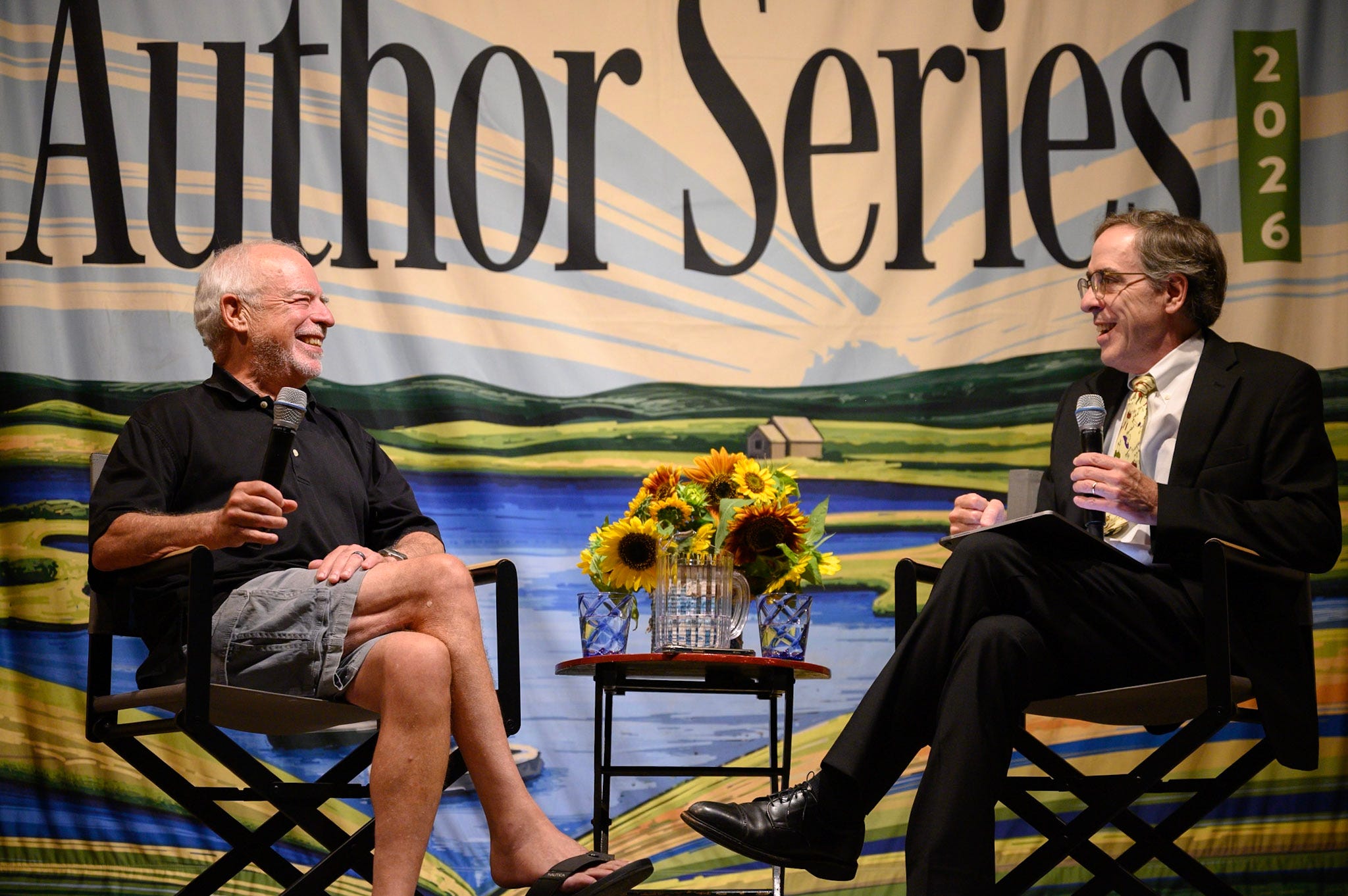
Richard Russo (left) dressed appropriately; Ron Charles (right) packed all the wrong clothes. (Photo by Jeanna Shepard)
The Writing Life
Last night on Martha’s Vineyard, I finally got to talk with the man who wrote the first novel I ever reviewed: Richard Russo.
Back in 1997, I was teaching English in St. Louis when a former student’s mother suggested I try writing book reviews. I bought a copy of Straight Man, wrote it up, and sold the review to The Christian Science Monitor.
The book literally changed my life. It was a great joy to tell him so in person.
Russo was on the island to talk about his career and his new novel, Under the Falls, as part of the Martha’s Vineyard Author Series. (Russo and I serve on the advisory board.)
The Series will close on Sunday with Michelle Obama in conversation with Michele Norris at 4:30. Because that event sold out in two minutes, a second appearance was added at 7:30. It, too, sold out.◆
Clippings
This week’s review is A Tender Age, Chang-rae Lee’s most autobiographical work of fiction, which burns away the sentimentality of childhood (review).
Speaking of, Christopher Robin was born on this day in 1920.
To salvage its inane seashell case against former FBI director James Comey, the Justice Department is now pointing to Comey’s 2025 thriller, FDR Drive, in which a right-wing podcaster encourages his followers to commit violence (details).◆
If you’d like to keep this book commentary alive, please consider a paid subscription. Even a few dollars helps.
In which Ron Charles, former book critic for the Washington Post, engages with an AI Reese Witherspoon via email to pursue getting his book review columns turned into an ensemble series, along the lines of White Lotus. 😂
 Log in



/uploads/screenshot_2026-09-11_09-07-49.png)
/uploads/screenshot_2026-09-11_09-08-21.png)
/uploads/screenshot_2026-09-11_09-08-42.png)
/uploads/screenshot_2026-09-11_09-09-13.png)

/uploads/screenshot_2026-09-11_09-05-50.png)
/uploads/screenshot_2026-09-11_09-48-11.png)